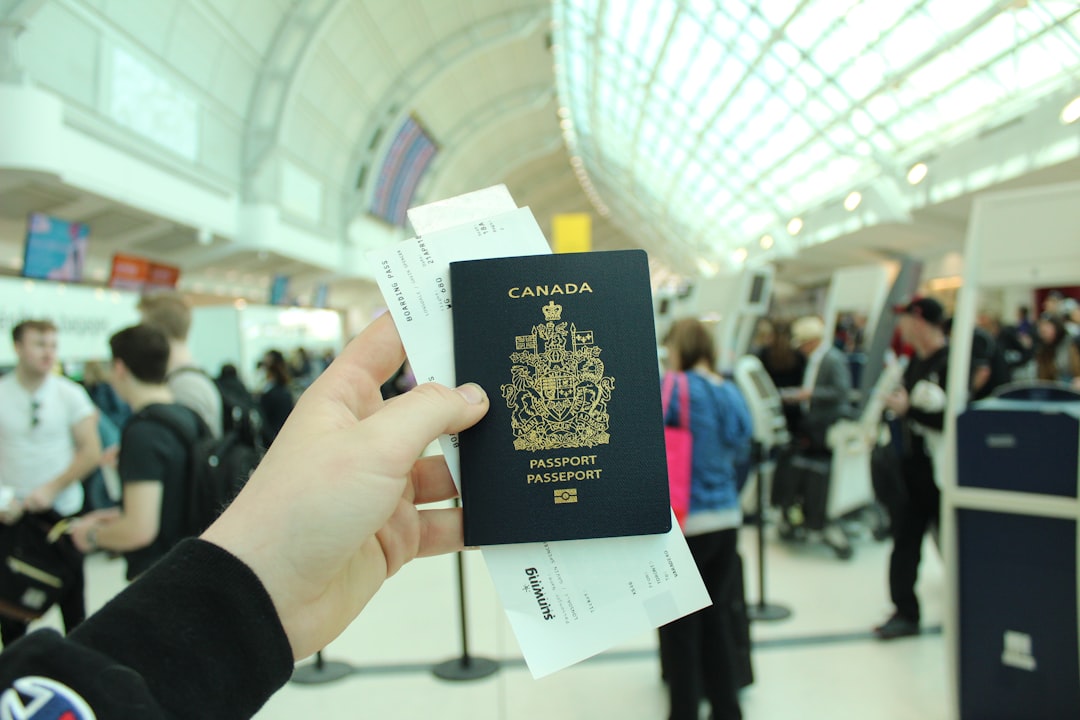
IRCC splits its study permit requirements across more than 15 web pages, and in 2026, three major policy changes hit at once: the PAL cap system tightened to 408,000 permits, the GIC minimum increased to $22,895, and the Student Direct Stream no longer exists. If you are working from a checklist written before these changes, you are building your application on outdated rules.
This is the single page that replaces all 15 of those IRCC pages. Every document, every dollar amount, every deadline, and the 7 refusal triggers that IRCC officers actually flag when they review your file. Bookmark it. You will come back to it more than once before you hit submit on GCKey.
Who Needs a Study Permit in 2026 (and Who Does Not)
Any program of study in Canada longer than 6 months requires a study permit. That covers virtually every diploma, bachelor’s, master’s, and PhD program at a DLI. But not every international student needs one.
You do not need a study permit if:
- Your course or program is 6 months or shorter and will be completed within the authorized stay on your visitor visa
- You are a minor child (under 18) of a parent who already holds a valid Canadian work or study permit
- You are on a short-term exchange or visiting student program under 6 months
- You are a family member or private staff of a foreign government representative accredited by Global Affairs Canada
If your program is longer than 6 months, run through this quick eligibility self-check before anything else:
- DLI enrollment confirmed? You have an acceptance letter from a school on IRCC’s designated learning institution list.
- Financial proof ready? You can show tuition plus living costs (more on the exact amounts below).
- Clean criminal record? No criminal convictions that would make you inadmissible to Canada.
- Medical exam required? Applicants from certain countries or those entering programs in healthcare or childcare need an upfront medical exam from a panel physician.
If you check all four, you are eligible to apply. But eligibility is just the first filter. The 2026 cap system adds a second gate that did not exist before 2024.
The 2026 Study Permit Cap and PAL System Explained
In January 2024, the Canadian government introduced a cap on new study permits. For 2026, that cap targets 408,000 new study permits, down from 437,000 in 2025. The mechanism that enforces this cap is the Provincial Attestation Letter, or PAL.

A PAL is a letter from your study province confirming that your application falls within that province’s allocated share of the national cap. You must obtain a PAL before you submit your study permit application to IRCC. Without it, your application will be returned as incomplete. For full details on what a PAL includes and how to request one, see the IRCC documents page for study permit applicants.
Each province receives a portion of the 408,000 cap based on population and institutional capacity. Ontario and British Columbia receive the largest shares. For the full breakdown of how PAL allocations work, province-by-province timelines, and how to request your PAL, read our complete PAL guide.
Who Is Exempt from the PAL Requirement
Not everyone needs a PAL. Use this decision tree:
- PhD students: Exempt. Doctoral programs are not counted against the cap.
- Master’s students at a university: Exempt. This applies specifically to university-level master’s programs, not college graduate certificates.
- K-12 students: Exempt. Elementary and secondary school students do not need a PAL.
- Exchange program participants: Exempt, provided the exchange is under a formal agreement between institutions.
If you are applying to a college diploma or bachelor’s program, you need a PAL. No exceptions.
Quebec: The CAQ Replaces the PAL
Quebec does not use the PAL system. Instead, you need a CAQ (Certificat d’acceptation du Quebec) issued through the Arrima portal. The CAQ has been a requirement in Quebec long before the national cap system existed, and it continues to serve as the province’s own attestation. If your DLI is in Quebec, apply for the CAQ first, then submit your federal study permit application with the CAQ attached.
What happens if your province runs out of PAL allocations? Your DLI cannot issue you a PAL letter, and you cannot submit a complete application until more allocations open up (if they do). This is why applying early matters more in 2026 than in any previous year.
Complete Document Checklist for a 2026 Study Permit
This is the full list of documents you need before you start your GCKey application. Missing even one can delay your application by weeks or result in a return.
- Letter of Acceptance (LOA) from a DLI. Must include your full name, program name, program start date, and the DLI number.
- Provincial Attestation Letter (PAL) or proof that you qualify for an exemption (PhD enrollment confirmation, master’s admission letter from a university, etc.).
- Valid passport. If your passport expires within 2 years of your planned arrival, renew it before applying. IRCC ties your study permit to your passport validity.
- Proof of funds. GIC receipt, bank statements, or a combination. See the next section for exact dollar amounts by province.
- Statement of Purpose (SOP). A letter explaining why you chose this program, why you chose Canada, and what you plan to do after graduation. This is where most weak applications fall apart.
- Language test results. IELTS, TOEFL, or PTE Core scores. IRCC does not mandate a specific test, but your DLI does, and officers use it to assess your academic readiness.
- Digital photos. Two photos meeting IRCC’s specifications (35mm x 45mm, white background, taken within the last 6 months).
- Biometrics. If you have not given biometrics to IRCC in the last 10 years, you will need to book a biometrics appointment at a Visa Application Centre (VAC) after you submit your application.
- Provincial health insurance proof. Required for Quebec (attach proof of coverage or intent to purchase). Other provinces vary.
- Medical exam results. Required if you are from a country on IRCC’s designated list or if your program involves healthcare, childcare, or agriculture. Must be completed by an IRCC panel physician.
- Police clearance certificate. Not always requested upfront, but IRCC may ask for one at any point. Having it ready speeds up processing.
Print this list. Tape it to your wall. Check off each item as you gather it. One missing document is all it takes to push your processing time past your program start date.
Proof of Funds Requirements by Province (With Exact Dollar Amounts)
Proof of funds is the single most common reason study permit applications get refused. Not because applicants do not have the money, but because they show it in the wrong format or the wrong amount. You can review the official IRCC financial requirements for the latest figures.

The formula is straightforward: first year’s tuition + living costs (GIC amount).
GIC Amount for 2026
As of September 1, 2025, the minimum living cost requirement for a single applicant is $22,895 CAD (up from $20,635 before that date). IRCC adjusts this figure annually based on Statistics Canada cost of living data, so confirm the current amount on the IRCC financial support page before you apply. For a detailed walkthrough of how GICs work, which banks offer them, and the refund process, see our GIC guide for international students.
Quebec: Different Rules
Quebec calculates living costs differently through the Arrima system. Expect to show approximately $15,000 CAD in living costs plus your full first-year tuition. Quebec also requires a CAQ fee of $127 CAD and has its own financial documentation format. Read our proof of funds guide for the full province-by-province comparison.
Stay Updated on Studying in Canada
Get the latest guides, scholarship alerts, and immigration policy updates delivered to your inbox weekly.
Subscribe for FreeBank Statements vs. GIC: When Each Works
A GIC is the cleanest way to prove funds because the money is locked in a Canadian bank. IRCC officers trust it immediately. Bank statements can work too, but they need to show a consistent balance over at least 4 months and be in the applicant’s name (or a parent’s name with a supporting letter).
Country-specific tips that immigration consultants charge $200 to tell you:
- India: Show a savings history of at least 6 to 12 months. Sudden large deposits right before the application raise red flags for IRCC officers. If you are applying from India, our study permit guide for Indian applicants covers this in detail.
- Nigeria: Be prepared to explain the source of your funds clearly. Officers review Nigerian applications closely for financial document authenticity. Include bank-stamped statements and a sponsor affidavit if someone else is funding your studies.
- Philippines: If a family member is sponsoring you, include their employment letter, tax returns, and a notarized support letter alongside the bank statements.
One applicant on the CanadaVisa forum shared that they submitted a GIC for $20,635 in late 2025, not realizing the requirement had already increased to $22,895 on September 1. They received a refusal letter within 3 weeks citing “insufficient proof of financial support.” They had the money. They just used the outdated figure. That $2,260 difference cost them a full application cycle, another $150 in fees, and 8 weeks of processing time on the resubmission. Always confirm the current GIC amount before you apply.
How to Apply Step by Step on GCKey
Once your documents are assembled, the actual application process on GCKey takes 45 to 90 minutes if you have everything ready. Rushing through it without preparation is how mistakes happen.
- Create a GCKey account at the Government of Canada’s online services portal. You will set up a username, password, and security questions. Keep these credentials somewhere safe; you will need them to check your application status later.
- Start a new study permit application. Select “Apply for a study permit” and choose whether you are applying from outside or inside Canada.
- Upload all documents from the checklist above. GCKey accepts PDF and JPEG formats. Each upload has a file size limit of 4 MB. Compress large documents before uploading.
- Pay the application fee. The study permit application fee is $150 CAD. If biometrics are required, add $85 CAD for a total of $235 CAD. Pay with a credit card or prepaid card.
- Submit and receive your AOR. This confirms IRCC has your application. Save the confirmation number.
- Complete biometrics within 30 days. After submitting, you will receive a Biometrics Instruction Letter (BIL). Book an appointment at your nearest VAC and attend within 30 days of receiving the letter.
- Respond to any additional requests. IRCC may ask for a medical exam, additional financial documents, or a police clearance. Respond within the deadline stated in the request. Missing a deadline can result in your application being closed.
- Track your application status. Log back into GCKey to check for updates. Processing time varies by country (see next section).
That is the full submission process. But after you hit submit, the waiting begins, and that is where most of the anxiety hits.
Processing Times and What to Do If Yours Is Delayed
IRCC publishes estimated processing times by country of residence on its website, and they update these figures regularly. As of early 2026, these are the approximate ranges:
- India: 7 to 11 weeks
- Nigeria: 10 to 16 weeks
- Philippines: 5 to 8 weeks
- Brazil: 6 to 10 weeks
- China: 6 to 9 weeks
For detailed processing time data and country-specific tips on speeding things up, see our study permit processing time tracker.
The SDS Fast-Track Is Gone
The SDS was discontinued on November 8, 2024. Before that, applicants from 14 countries (including India, China, the Philippines, Vietnam, and Nigeria) could get processing in as little as 20 days through SDS. That option no longer exists. All applications now go through the regular stream regardless of your nationality.
PhD Fast-Track: 2-Week Processing
Doctoral applicants are the one group that still gets expedited treatment. IRCC processes PhD study permit applications in approximately 2 weeks. To qualify, your LOA must clearly state that you are enrolled in a doctoral-level program. If your LOA says “graduate studies” without specifying PhD, contact your university’s admissions office and ask them to reissue it with the doctoral designation.
When Processing Exceeds Posted Times
If your application has been processing longer than the posted timeline for your country, you have three options:
- IRCC Web Form: Submit an inquiry through IRCC’s online portal. Include your application number and the date you submitted. This creates a formal record that you are waiting beyond the expected timeframe.
- Contact your Member of Parliament (MP): If you are already in Canada (or have a representative who is), your local MP can submit a case inquiry on your behalf to IRCC. This does not guarantee faster processing, but it flags your file.
- Flagpoling: If you are already in Canada on a valid status and need to convert or renew, driving to a land border crossing (flagpoling) and requesting processing at the port of entry can sometimes resolve delays. This works best for extensions, not initial applications.
A delayed application is stressful. A refused application is worse. And most refusals in 2026 come down to the same seven mistakes.
Top 7 Refusal Reasons in 2026 and How to Avoid Each One
IRCC officers review thousands of applications every week, and they follow a structured assessment framework. These are the 7 triggers that lead to refusals most often, based on refusal letter patterns and IRCC policy guidance. For a deeper breakdown of each one with real examples, see our study permit refusal reasons guide.
- Insufficient proof of funds. Either the total amount is below the requirement, the funds are not in the applicant’s name, or the format does not match what IRCC accepts. The fix: use a GIC for the correct amount and ensure bank statements cover at least 4 months of history.
- Weak Statement of Purpose. A vague SOP that does not explain why you chose this specific program at this specific school in Canada, or that fails to demonstrate ties to your home country, is a red flag. Officers want to see that you have a plan, not just a desire to leave.
- Missing or invalid PAL. Applying without a PAL, or with a PAL from the wrong allocation year, will get your application returned. Double-check the attestation year on your PAL letter before uploading.
- Financial documents that do not match stated income. If your SOP says your parents run a small business but your bank statements show a sudden deposit of $50,000 with no prior history of that income level, officers will question the legitimacy. Consistency between your narrative and your financial evidence matters.
- Study gap of 5+ years without explanation. A gap between your last education and your proposed program is not automatic grounds for refusal. But failing to address it in your SOP is. Explain what you did during the gap (worked, saved money, gained experience) and why you are returning to studies now.
- Previously refused applicants resubmitting the same application. Each refusal is recorded in IRCC’s Global Case Management System (GCMS). If you reapply with the same documents and the same SOP, expect the same result. Change what was weak. Add new evidence. Address the specific reasons from your refusal letter.
- Cap-related blocking. This is not technically a “refusal” in the same way. If your province runs out of PAL allocations, your DLI cannot issue a PAL, and you cannot submit a complete application. The cap does not directly refuse you, but it can prevent you from applying at all if you wait too long.
The pattern across all seven: officers are not looking for reasons to refuse you. They are looking for evidence that you are a genuine student with a clear plan, adequate funding, and intent to return home after your studies. Give them that evidence in every document.
After Your Study Permit Is Approved: First 30 Days in Canada
Your study permit approval letter is not your actual study permit. It is a letter of introduction that you present at the Canadian port of entry. The border officer issues your physical study permit on arrival. For a complete first-month checklist, read our arriving in Canada guide for international students.

At the Port of Entry
Bring your passport, letter of introduction, LOA, proof of funds, and proof of accommodation (even a temporary booking works). The officer will verify your documents and issue your study permit with conditions: your DLI name, program, and permit expiry date.
Your First-Week Checklist
- Get your Social Insurance Number (SIN). Apply at a Service Canada office. You need this to work and to open a bank account.
- Open a Canadian bank account. If you purchased a GIC, the funds are already in a Canadian bank, but you will still want a chequing account for daily expenses.
- Get a Canadian phone plan. You need a local number for two-factor authentication on your bank, school portal, and IRCC account.
Off-Campus Work Rules
As of 2026, study permit holders can work up to 24 hours per week during academic sessions and unlimited hours during scheduled breaks (winter, spring, and summer holidays). You do not need a separate work permit for off-campus employment. Your study permit is your authorization, as long as you maintain full-time enrollment status.
Connect Your Study Permit to the PGWP Pathway
Your study permit is not just permission to study. It is the first step toward a PGWP after graduation, which can lead to permanent residency through Express Entry or a PNP. Choose a program that qualifies for a PGWP (check IRCC’s eligible programs list) and maintain full-time enrollment throughout. The decisions you make now about your DLI and program length directly affect your PR pathway later.
You now have every requirement, every dollar amount, and every deadline for a 2026 Canada study permit application. Open GCKey and start assembling your documents using the checklist above. If you need deeper dives, the PAL guide, proof of funds guide, and processing time tracker linked throughout this article cover each topic in full. Bookmark this page. Check back before you submit, because IRCC updates requirements throughout the year, and we update this checklist to match.
Consult a licensed immigration consultant (RCIC) or lawyer for advice specific to your situation. This guide is educational and does not constitute legal advice.
Frequently Asked Questions
How long does it take to process a study permit application in 2026?
Times vary by country: India 7 to 11 weeks, Nigeria 10 to 16 weeks, Philippines 5 to 8 weeks. There is no fast-track since the SDS ended in November 2024, though PhD applicants may qualify for 2-week processing. See the processing times section above for the full breakdown.
Do I need a PAL to apply for a study permit in 2026?
Yes, most applicants need a Provincial Attestation Letter before submitting their application. Exemptions exist for PhD students, master’s students at a public DLI, K-12 students, and exchange participants. See the PAL system section above for the complete exemption decision tree.
How much proof of funds do I need for a Canada study permit?
First year’s tuition plus the GIC living cost amount of $22,895 CAD (effective since September 1, 2025). IRCC adjusts this annually, so confirm the current figure before applying. Quebec uses different figures through the Arrima system. See the proof of funds section above for the full breakdown.
Can I apply for a study permit without IELTS?
IRCC does not require a specific language test for the permit application itself, but your school almost certainly requires one for admission. Note that Duolingo scores are not accepted for PGWP eligibility under 2024 rules, so your test choice has long-term implications.
What happened to the Student Direct Stream (SDS)?
IRCC discontinued the SDS on November 8, 2024. All applications now go through the regular processing stream regardless of nationality, so applicants from formerly SDS-eligible countries no longer have access to 20-day fast-track processing.
Can I work while studying in Canada?
Yes. You can work up to 24 hours per week off-campus during academic sessions and unlimited hours during scheduled breaks. You need a valid study permit and a SIN, but no separate work permit is required.
What is the study permit cap for 2026?
The cap targets 408,000 total study permits (approximately 155,000 for newly arriving students and 253,000 for extensions), down from 437,000 total in 2025, allocated by province through the PAL system. You can read more about extending your study permit in our separate guide.
Can I apply for a study permit from inside Canada on a tourist visa?
In limited circumstances, yes. You may be eligible if you completed a short course or prerequisite program at a DLI that was required before starting your main program of study. Generally, you must apply from outside Canada. Since 2024, IRCC has significantly restricted the visitor-to-student pathway, so check the current IRCC policy before relying on this option.
My study permit was refused. Can I reapply?
Yes, and there is no limit on reapplications. However, submitting the same application without changes will likely produce the same result. Review your refusal letter, address every cited reason, and consider ordering GCMS notes before reapplying. See the refusal reasons section above for the full breakdown.
Do PhD students get faster processing?
Yes. IRCC processes doctoral applications in approximately 2 weeks, and PhD students are also exempt from the PAL requirement and the study permit cap. Your acceptance letter must clearly specify doctoral enrollment to qualify.
I have a study gap of several years. Will this cause a refusal?
Not automatically, but an unexplained gap of 5 or more years raises questions for IRCC officers. Address it directly in your Statement of Purpose with a credible explanation such as work experience or family obligations. See the refusal reasons section above for more detail.