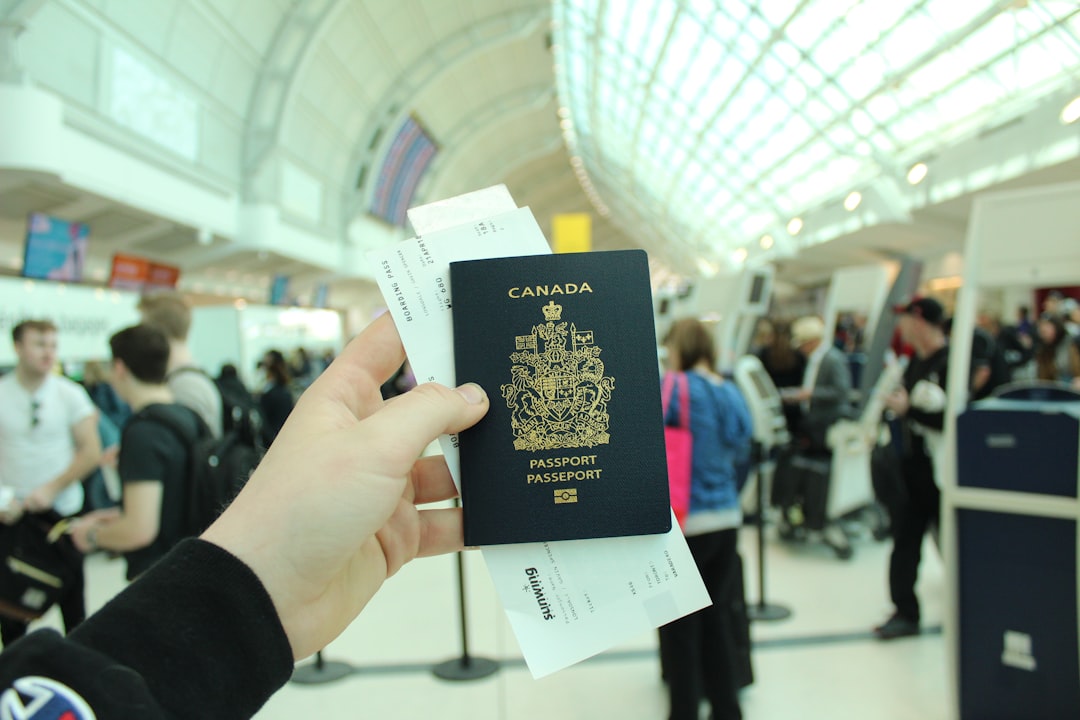
In Q1 2026, 78% of EE invitations went to category-based draws, not general rounds. Planning your PR strategy using advice from 2023 or 2024 means aiming at a target that no longer exists. You have read dozens of articles that list the same three options (CEC, FSW, PNP) and none of them tell you what to do first, second, or third. This guide maps the complete international student Canada pathway from study permit to PR card, with current 2026 costs, timelines, and a French language shortcut that most guides skip entirely.
Why Most International Student Pathway Guides Are Already Outdated
Between November 2024 and March 2025, IRCC overhauled nearly every rule that affects international students planning for PR. These were not small adjustments. They restructured the entire landscape.
Study permit caps now limit new approvals to 437,000 for 2025, down from uncapped intake in previous years. PGWP eligibility now requires your program to fall within specific CIP code fields tied to labor market needs. Spousal open work permits are restricted to spouses of students in master’s and doctoral programs. And as of March 2025, CRS points for job offers were removed entirely from Express Entry calculations.
Most guides still have not caught up with the biggest shift: the move from general Express Entry draws to category-based draws. In 2023, a general draw cutoff sat around 490 to 500 CRS points. By late 2025, general draw cutoffs climbed above 535. Category-based draws for French language proficiency, however, pulled candidates with scores as low as 336. That 200-point gap changes the entire calculus of how you should plan your PR strategy.
Any article written before November 2024 that does not account for these changes is giving you a roadmap to a destination that moved. The five phases below reflect the rules as they stand right now.
The 5 Phases of the International Student Canada Pathway to PR
The full timeline from your first study permit application to holding a PR card typically spans 3.5 to 7 years. That range depends on your program length, language scores, work experience, and which PR stream you target. Breaking it into five phases makes each stage manageable.

Phase 1: Study Permit and Arrival (3 to 6 Months)
You apply for your study permit, complete biometrics and a medical exam, receive approval, and arrive in Canada. Processing times in 2026 average 7 to 12 weeks for most countries. This phase also includes your GIC deposit and first tuition payment. For a detailed walkthrough, see our study permit guide.
Phase 2: Study and Build Your Profile (1 to 4 Years)
Complete your program at a DLI while strategically building your PR profile. Choose courses in PGWP-eligible fields, take language tests early, and consider starting French classes. More on why province and program selection should be a single decision in the next section.
Phase 3: Graduate and Get Your PGWP (1 to 6 Months After Graduation)
Apply for your PGWP within 180 days of receiving your program completion letter. Any program of 2 years or more (college or university) qualifies for up to a 3-year PGWP. Master’s degree graduates get a 3-year PGWP even if the program was shorter than 2 years.
Phase 4: Work, Build CRS Points, and Apply (6 to 18 Months)
Gain skilled Canadian work experience, finalize your language scores, submit your ECA through WES, and enter the Express Entry pool or apply to a PNP stream. Strategy matters most at this stage, and the category-based draw approach can cut your required CRS score dramatically.
Phase 5: PR Application and Landing (6 to 12 Months)
After receiving your ITA, submit your full PR application with supporting documents. Current processing for CEC applications averages 4 to 6 months. Once approved, you complete your landing and receive your PR card.
Picture a 22-year-old computer science student from India who arrives in September 2026 for a 2-year college diploma in Ontario. She graduates in June 2028, receives her PGWP by August 2028, works for 12 months in a skilled role, enters Express Entry in September 2029, receives an ITA by early 2030, and holds her PR card by mid-2030. That is roughly 4 years from arrival to PR. A 4-year university student following the same path might hold their PR card by 2032, but with stronger CRS points from the higher credential.
Decisions you make in Phases 1 and 2 determine everything that follows.
Phases 1 and 2: Choosing the Right Program and Province Together
Most guides treat program selection and province selection as separate decisions. That is a mistake. Your province determines which PNP streams you can access. Your program determines PGWP eligibility, duration, and CRS education points. Making these choices independently can lock you out of the fastest international student Canada pathway options.
Since November 2024, PGWP eligibility requires your program to fall within designated CIP code fields aligned with Canadian labor market needs. Healthcare, STEM, agriculture, and skilled trades are eligible. Some general business and social science programs may not be. Before accepting any admission offer, verify your program’s CIP code against the IRCC PGWP eligibility list.
PGWP duration follows specific rules:
- Programs under 8 months: no PGWP eligibility
- Programs of 8 months to under 2 years: PGWP matches program length
- Any program of 2 years or more (college or university): up to 3-year PGWP
- Master’s degree (8 months or more): 3-year PGWP regardless of program length
A 3-year PGWP gives you more runway to gain experience, retake language tests, and wait for favorable draw rounds. With only a 1 or 2-year permit, the timeline gets tight.
Province-program pairing matters because each province runs different PNP streams with different priority occupations. British Columbia’s PNP favors tech sector graduates. Saskatchewan and Manitoba have more accessible PNP thresholds. Atlantic provinces through the Atlantic Immigration Program offer lower tuition with dedicated PR pathways. For comparisons of universities by province, our best universities guide breaks down the options. For city-level considerations, see our best cities guide.
College vs. university also feeds directly into CRS scoring. A bachelor’s degree earns 120 CRS education points. A 3-year college diploma earns 98 points. A master’s degree earns 135 points. Those extra 22 to 37 points from a higher credential can determine whether you receive an ITA or wait another year.
Even a perfect program and province pairing will not help if you miss the 180-day PGWP deadline. And the requirements for that application changed significantly in late 2024.
Phase 3: PGWP Application and the 180-Day Deadline
Apply for your PGWP within 180 days of receiving your official program completion letter from your DLI. Missing this window means losing PGWP eligibility entirely, with no extension or appeal for a late application.
Since November 2024, PGWP applications require language test results. College graduates need a minimum CLB 5. University graduates need CLB 7. For IELTS General, CLB 5 translates to: Listening 5.0, Reading 4.0, Writing 5.0, Speaking 5.0. CLB 7 translates to: Listening 7.5, Reading 6.5, Writing 6.5, Speaking 6.5.
Smart students book their language test during their final semester. Waiting until after graduation burns precious days within the 180-day window, especially if scores come back below threshold and you need a retake. For preparation resources, see our IELTS preparation guide.
PGWP application fee: $255. Processing takes approximately 60 to 120 days in 2026, though you receive implied status (authorization to work) while your application is pending.
Watch out for the passport validity trap: your PGWP cannot extend beyond your passport’s expiry date. A passport expiring in 18 months means you will receive only an 18-month permit, even if you qualify for 3 years. Renew your passport before applying.
Some students consider flagpoling (driving to a US-Canada border crossing to get the PGWP issued on the spot). This works but carries risks: a border officer who identifies an issue with your application could refuse you re-entry. Online application with implied status is generally safer.
With a 1-year PGWP, you need to start your PR application process from day one of employment. The good news: the category-based draw system creates opportunities that did not exist two years ago.
Phase 4: Building Your CRS Score and the Category-Based Draw Strategy
Your CRS score determines when you receive an ITA through Express Entry. A typical international student graduating in 2026 with a bachelor’s degree, age 25, CLB 9 English, and 1 year of Canadian work experience scores approximately 460 to 480 CRS points. In 2023, that score would have earned an ITA within months. General draw cutoffs now sit at 535 or higher, leaving a 55-to-75-point gap.

Key CRS factors for international graduates:
- Age: 25 to 29 years old earns the maximum 110 points
- Education: bachelor’s degree = 120, master’s = 135
- First language: CLB 9 across all bands = 116 points, CLB 10 = 136
- Canadian work experience: 1 year = 40 points, 2 years = 53, 3+ years = 64
- PNP nomination: adds 600 points (essentially guarantees an ITA)
Category-based draws change everything. IRCC has run targeted draws for six categories in 2025 and 2026: healthcare occupations, STEM professions, French language proficiency, transport occupations, agriculture and agri-food, and trade occupations. French language proficiency consistently shows the lowest cutoff scores.
Consider this scenario. A student with 460 CRS points in the general pool would wait indefinitely for an ITA at current cutoffs. That same student takes an intensive French course over 6 months, achieves CLB 7 (TEF scores of approximately 310 to 348 per section), and gains up to 50 additional CRS points for bilingual proficiency. Their score rises to around 510. More importantly, they now qualify for French-language category draws where cutoffs have been as low as 336. They receive their ITA in the next round.
French proficiency is the single most underused strategy on the international student Canada pathway. You do not need to be fluent. CLB 7 represents an intermediate level, roughly B2 on the European framework. Many Alliance Francaise and private language schools across Canada offer intensive programs designed to reach CLB 7 in 6 to 12 months.
When does PNP become the better option? A provincial nomination adds 600 CRS points, essentially guaranteeing an ITA. Provincial processing times range from 2 to 8 months. Saskatchewan’s International Skilled Worker category and Nova Scotia’s Labour Market Priorities stream are among the faster options. A licensed immigration consultant (RCIC) can help you compare Express Entry and PNP timelines for your specific profile, which is where personalized advice pays for itself.
What Every Step Costs: Study Permit to PR Card
Beyond tuition and living expenses, the international student Canada pathway adds up to approximately $26,000 to $26,300 CAD in government fees, deposits, and assessments. Below is the immigration-specific cost breakdown.

| Item | Cost (CAD) | Phase |
|---|---|---|
| Study permit application | $150 | Phase 1 |
| Biometrics | $85 | Phase 1 |
| GIC deposit (refundable over 12 months) | $22,895 | Phase 1 |
| Medical exam | $200 to $450 | Phase 1 |
| IELTS General test | $315 | Phase 2 or 3 |
| Second language test (retake or French TEF) | $315 | Phase 2 to 4 |
| WES credential evaluation (ECA) | $300 | Phase 4 |
| PGWP application | $255 | Phase 3 |
| Express Entry PR processing fee | $950 | Phase 5 |
| Right of Permanent Residence Fee (RPRF) | $575 | Phase 5 |
Total immigration fees (excluding tuition and living): approximately $26,040 to $26,290 CAD. The $22,895 GIC is the largest single amount, but it is refundable in monthly installments over your first 12 months. Actual out-of-pocket for non-refundable fees is closer to $3,145 to $3,395.
Budget for at least two language test attempts. IELTS and CELPIP results are valid for 2 years, so timing matters. Taking the test too early means results may expire before your PR application. Plan your test dates so results remain valid through the full process. For a full breakdown of tuition and living expenses by province, our comprehensive study-in-Canada guide covers each in detail. For updated information on the 2026 study permit cap, that guide breaks down the numbers.
These costs assume everything goes according to plan. But immigration pathways rarely follow a straight line, and the difference between a setback and a disaster often comes down to knowing your backup options before you need them.
When Things Go Wrong: Backup Plans for Common Setbacks
Policy changes, processing delays, and unexpected test results derail PR timelines for thousands of students every year. Planning for setbacks protects the years and money you have already invested.
PGWP Refused or Only 1 Year
A PGWP refusal usually comes down to a documentation issue (fixable through reapplication) or a program eligibility issue (harder to fix). Should your program’s CIP code have been removed from the eligible list after enrollment, you may have grounds for reconsideration. With a 1-year PGWP, prioritize Express Entry or PNP applications from day one. Waiting to accumulate more experience is not an option at that timeline.
CRS Score Too Low for General Draws
Four strategies to close the gap:
- Learn French to CLB 7 (adds up to 50 CRS points and opens category-based draws with cutoffs at 336)
- Apply for a PNP nomination (adds 600 CRS points)
- Complete a second Canadian credential such as a 1-year graduate certificate (adds up to 30 education points)
- Gain more Canadian work experience (each additional year adds 13 to 24 CRS points)
Language Test Scores Expire
IELTS, CELPIP, TEF, and TCF results all expire after 2 years. Rebook the test and submit updated scores before expiry. Express Entry allows you to update your profile with new results at any time while you are in the pool.
Gaps in Work Authorization
A bridging open work permit (BOWP) can extend your authorization when your PGWP expires while a PR application is in progress. BOWP eligibility requires a valid PR application under an economic program and a current work permit expiring within 4 months.
Job Loss During PGWP
Losing your job does not cancel your PGWP. The permit remains valid for any occupation. However, gaps in skilled work experience slow CRS accumulation and may affect PNP eligibility in streams requiring continuous employment. Start searching for new roles immediately and document your maintained status carefully.
Policy Changes Mid-Pathway
IRCC can change rules with relatively short notice. The November 2024 PGWP restrictions were announced just weeks before taking effect. Protect yourself by maintaining two viable PR pathways at all times. Express Entry CEC as your primary plan, with a PNP application as backup. Flexibility is your insurance against policy shifts.
Frequently Asked Questions
What is the fastest path from international student to PR in Canada?
The fastest path typically takes 3.5 to 4 years. Complete a 2-year program at a DLI, obtain your PGWP, gain 1 year of skilled Canadian work experience, and apply through Express Entry CEC or a PNP stream. Adding French proficiency at CLB 7 qualifies you for category-based draws with cutoffs as low as 336 CRS points, which significantly speeds up the timeline.
Can I apply for Express Entry while still on my PGWP?
Yes. Create your Express Entry profile and enter the pool as soon as you meet eligibility requirements, even while your PGWP is valid. Most international graduates apply after completing 1 year of skilled work in Canada, which qualifies them for CEC.
Should I choose a college or university for the best path to PR?
Both lead to PR, but trade-offs differ. A 2-year college diploma costs less and leads to a PGWP of up to 3 years. A 4-year university degree also leads to a 3-year PGWP but earns more CRS education points (120 vs. 98). When your CRS score will be borderline, those extra points from a university degree can make the difference. For PNP-focused strategies, college programs aligned with provincial labor needs often lead to faster nominations.
What are category-based Express Entry draws and do I qualify?
Category-based draws are targeted Express Entry rounds for candidates with specific qualifications: French language proficiency, healthcare experience, STEM credentials, trade occupations, transport experience, or agriculture backgrounds. In Q1 2026, 78% of all Express Entry invitations came through these draws. French proficiency at CLB 7 is the most accessible category for international students because it requires language courses, not specific work experience.
My PGWP is only 1 year. Is that enough time to get PR?
A 1-year PGWP makes the timeline tight but not impossible. Start working in a skilled occupation immediately and apply to Express Entry or a PNP stream as soon as eligibility is met. Some provinces, including British Columbia and Ontario, have PNP streams with processing times under 6 months. Should your PGWP be expiring before you receive PR, a bridging open work permit (BOWP) can extend your work authorization.
Your Next Steps
You now have the complete 5-phase roadmap, current costs, and strategies that account for the 2026 immigration landscape. The single most valuable action right now: verify that your target program’s CIP code is on the PGWP-eligible list before you commit to any school.
Already in Canada and approaching graduation? Read our comprehensive guide to studying in Canada for detailed PGWP coverage and to make sure you meet the new language requirements and do not miss the 180-day window.
Immigration rules shift frequently, and a single policy change can alter the best international student Canada pathway overnight. Subscribe to our free policy update newsletter so you know the moment a change affects your plan. Save this page as your reference, and we will keep it updated as new rules take effect.
This article is for informational purposes only and does not constitute legal or immigration advice. Consult a licensed immigration consultant (RCIC) or lawyer who is a member of a Canadian provincial law society for advice specific to your situation.