
Your maintained status dies the moment the gate agent at Toronto Pearson scans your boarding pass. Not when the wheels lift. Not when you land in Delhi or Beijing. The scan. Under IRPR 183(5) and 183(6), the temporary-resident extension that protects you while IRCC processes your PGWP only operates inside Canada, and the IRCC Help Centre answer 1309 confirms that crossing the border restarts the analysis at re-entry.
Travel outside Canada on maintained status while PGWP pending is risky because at the May 2026 inside-Canada online PGWP processing time of 90 to 180 days, a 14-day trip home can cost you 4 to 12 weeks of CEC-qualifying work. Every lost week pushes your Express Entry timeline back by exactly that week. The four scenarios CBSA actually uses at the booth, the IMM 0127 letter most blogs never name, the math against current processing times, and the airport-day document stack are below.
The 90-Second Answer (Before You Buy the Ticket)
Four scenarios cover almost every PGWP-pending traveler. Find yours first.
- Scenario A: Your study permit was valid when you submitted the PGWP application AND is still valid today. Re-entry as a visitor with permission to work is possible, subject to officer discretion. This is the strongest position.
- Scenario B: Your study permit was valid at PGWP submission but has since expired. Re-entry as a visitor is possible if your TRV or eTA is valid; you cannot work until IRCC issues the PGWP.
- Scenario C: You applied to extend your PGWP because your passport expired and you are waiting on the new one. Re-entry as a visitor only; you cannot work until the new permit issues.
- Scenario D: You think you can travel because someone in a WhatsApp group said so. That person was almost certainly on a BOWP (a real work permit issued to permanent-residence applicants), not on PGWP-pending maintained status. The rules are completely different. See the dedicated section below.
The IMM 0127 letter, issued by IRCC to PGWP applicants, is valid for 180 days. It is the document airline and CBSA staff expect to see. Most travel headaches come from people who left without it, or who confused it with IMM 5988 (extended to 365 days in April 2026 for non-PGWP applicants only).
The safe answer is do not travel until your PGWP is approved. The rest of this article tells you how to harden the trip if you must go, and how to do the cost math honestly.
What Maintained Status Actually Is (And Where It Dies)
IRPR 183(5) says: if a temporary resident applies for an extension and a decision is not made before the period authorized ends, the period is extended until IRCC decides. IRPR 183(6) adds that the temporary resident retains their status during that extension.
Read both subsections carefully. Neither one says leaving Canada terminates maintained status. The statute extends an authorized stay; it does not address re-entry. The leaving-terminates-it rule comes from IRCC operational guidance, specifically Help Centre answer 1309. Cite the two sources together. Anyone who says “IRPR 183 says you cannot leave” has not read IRPR 183.
“Implied status” is the older term for the same concept, still used by employers and older Reddit threads. If your HR contact asks for proof of “implied status,” they want IMM 0127.
A Bangalore graduate has a sister’s wedding 4 weeks away. PGWP is at day 20. She books the flight. At the Delhi gate, the airline agent asks for her work permit. She shows the IMM 0127 on her phone. The agent has never seen one. She spends 90 minutes on the phone to a supervisor and misses the boarding cutoff. The ticket is gone. The airline stopped her before CBSA ever saw the file, which is why proving work authorization with the IMM 0127 letter matters even before the border.
The IMM 0127 Letter Your Consultant Probably Confused With IMM 5988
Two work-permit-extension letters exist in 2026. They are not interchangeable, and the difference shows up in airport rooms every week.
- IMM 5988 is the generic WP-EXT letter for non-PGWP work permit extensions. Validity was extended from 180 to 365 days on April 27, 2026.
- IMM 0127 is the WP-EXT letter for PGWP applicants. Validity stayed at 180 days. PGWP applicants were explicitly excluded from the April 2026 extension.
The CIC News announcement of the change is the cleanest plain-English summary of the carve-out. The IRCC extend-work-permit page is the primary source.
The common myth, often repeated by consultants and HR departments, is that “the WP-EXT letter was discontinued.” It was not. It exists as two documents with two validity periods. If your consultant gave you that line, ask which letter they meant; if they cannot answer, you have your data point.
For a PGWP applicant, IMM 0127 is the single most important paper to carry to the airport. It is not authorization to work; it is proof an application was submitted on a valid study permit. Work authorization itself comes from IRPR 186(w) read with IRCC’s operational position.

The Math: How a 14-Day Trip Home Becomes 4 to 12 Weeks of Lost Work
The May 2026 IRCC tracker shows 90 to 180 days for inside-Canada online PGWP applications; 4 to 7 months for paper or overseas. Run the math at two points in the band.
Day 60 of a 90-day file. A 14-day trip. If CBSA refuses re-entry as a worker, you finish the last 30 days of processing abroad. Roughly 4 weeks of lost CEC-qualifying work. Floor case.
Day 90 of a 180-day file. Same trip. Refused as a worker. The remaining 90 days run abroad. Roughly 13 weeks lost. Typical case for a graduate who timed the trip mid-processing.
Canadian Experience Class requires 12 months of full-time skilled work inside Canada within the last 36 months. Every lost week of authorized work pushes your Express Entry CEC profile back by exactly that week. If your CRS depends on hitting a 12-month mark before a draw, the trip just rescheduled your PR. Working under the table to recover those weeks is not a workaround; it is a permit risk that ends careers.
A Hyderabad graduate at day 40 of a 150-day file went home for his grandfather’s funeral. He carried the IMM 0127. The CBSA officer accepted re-entry as a visitor but refused work authorization; the study permit had expired during the trip. He waited 11 more weeks for the PGWP. His employer held the job for 6 weeks, then filled it. He lost 11 weeks of CEC work and the job. The legal advice was correct. The cost was real.
The Four CBSA Scenarios, Side by Side
At re-entry the CBSA officer assigns you to one of four boxes. The decision tree below mirrors how the officer actually thinks, in the order they ask the questions.
| Scenario | Study permit at PGWP submission | Current TRV / eTA | Re-entry door | Can you work? |
|---|---|---|---|---|
| A: Strongest | Valid AND still valid today | Valid | Visitor with permission to work without a permit | Yes, under IRPR 186(w) until IRCC decides |
| B: Common | Valid at submission, expired since | Valid | Visitor only | No, not until PGWP issues |
| C: PGWP extension (passport expiry) | Original PGWP expired; extension pending | Valid | Visitor only | No, not until extension issues |
| D: Refused | Any of the above | Expired, missing, or any other admissibility issue | No entry | No, and processing continues abroad |
Officer discretion is the binding constraint, not the rule on paper. Factors that move discretion in your favor: application and fee receipt at the booth, IMM 0127 letter, study permit clearly valid at submission, valid TRV or eTA, visible ties to Canada (lease, bank statements, employment letter), funds, truthful consistent answers, no prior immigration issues. The inverses move it against you. Read the 180-day and 90-day PGWP window rules if your study permit expiry is close.
PGWP Pending Is Not BOWP. Do Not Confuse These.
Stated plainly: BOWP holders are permanent-residence applicants issued an actual Bridging Open Work Permit. The BOWP is a permit document, not a paper letter. They can travel. They have a real work permit in hand.
PGWP-pending applicants hold only maintained status under IRPR 183. No bridging document. No permit until IRCC issues the PGWP. The “automatic open work permit for graduates” rumor is a related myth.
If someone tells you “you can travel while waiting for IRCC,” ask: BOWP or PGWP-pending? If they cannot answer, the advice is wrong. The two pathways share nothing except the phrase “waiting on IRCC.”
Flagpoling Will Not Save You (Closed Since 2024)
PGWP flagpoling was banned in June 2024. All other work and study permit flagpoling at land ports was banned on December 23, 2024 at 11:59 PM ET. Exemptions are narrow: US citizens and US permanent residents, plus FTA professionals under CUSMA, Chile, Panama, South Korea, Colombia, and Peru. For an India or China applicant on PGWP-pending, flagpoling is closed.
The Brito decision allows visa-exempt foreign nationals on implied status who briefly visit only the US or St. Pierre and Miquelon to apply for a new work permit at the port of entry on return. Narrow legal carve-out, not a workaround. Do not rely on it without a lawyer reviewing your facts. Visa-required nationals do not qualify regardless. Do not let a 2023 YouTube video convince you that a quick run to Niagara Falls solves anything. It will not.
If You Absolutely Must Travel: The Airport-Day Checklist
Print everything. Do not rely on the IRCC portal on a phone with weak airport wifi. The stack below matches the officer’s decision tree above.
- Passport with at least 6 months of validity beyond your planned re-entry date.
- Valid TRV (visa-required nationals including India and China) or valid eTA (visa-exempt nationals). Expired TRV is the single most common refusal cause for India applicants.
- Current study permit, even if it has expired since PGWP submission. Bring the actual permit document.
- Proof of PGWP submission: the AOR from your GCKey portal, the fee payment receipt, and a printed copy of the application form summary.
- IMM 0127 letter if IRCC has issued it. If you do not have it yet, bring the AOR.
- Proof of program completion: final transcript and completion letter from your DLI.
- Ties to Canada: current lease, recent bank statements, employment letter or job offer (the Canadian resume your employer used should reference the work-authorization line), Canadian-issued ID.
- The IRCC Help Centre 1309 page, printed in English, in case the officer wants to see the operational guidance you are relying on.
Carry two copies of everything. Save digital copies to a non-cloud folder on your phone. There is no legal trick that eliminates the trade-off; the documents only stack the odds in your favor.
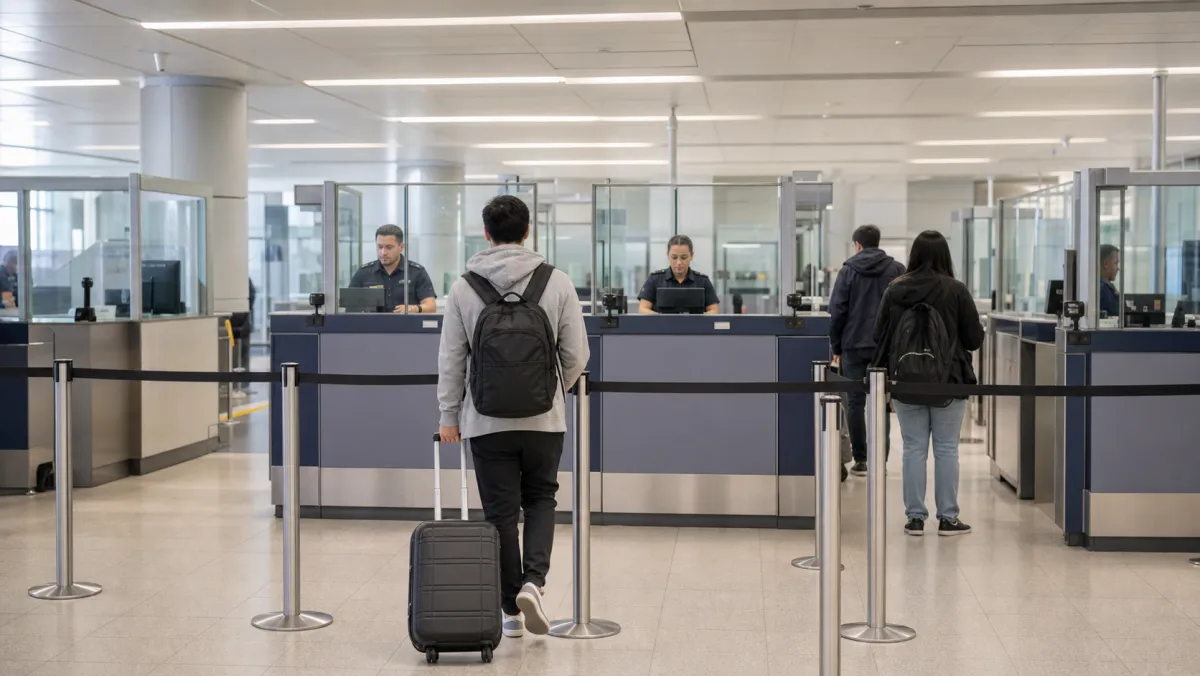
Six Confusions to Stop Believing Right Now
- “Maintained status protects me anywhere.” False. Inside Canada only, under IRPR 183.
- “WP-EXT was discontinued.” False. IMM 0127 (PGWP, 180 days) and IMM 5988 (non-PGWP, 365 days) both exist.
- “Flagpoling can save me.” False for PGWP since June 2024; for all work and study permits since December 23, 2024.
- “A Visitor Record is a travel document.” False. It extends stay inside Canada only.
- “PR applicants travel, so I can too.” False. They hold a BOWP; you hold maintained status.
- “A Reddit success story means it is safe.” False. CBSA discretion varies by officer, day, port of entry (POE), and profile. Sample size of one is not data.
Consult a licensed immigration lawyer or Regulated Canadian Immigration Consultant for advice specific to your situation.
What to Do Next
If you have decided to wait inside Canada, the next problem is proving work authorization to an employer who has never seen IMM 0127. Read the companion guide on the 6-document stack and the copy-paste HR email that closes that conversation in one reply.
If you are still inside the decision, run the math against your processing band, carry the airport stack, and know which of the four scenarios you fall into before you book the ticket.