
(Composite case based on real student files. Names and identifying details changed. The policy mechanics, dates, and PGWP math are exact.)
My first study permit was approved in March 2020, two weeks before Wuhan locked down. I never boarded my flight. I sat in my parents’ apartment in Shenzhen for 24 months and finished a two-year Canadian college program over Zoom. I did not set foot in Canada until August 2022, when I landed at YVR with my PGWP application in a folder under my arm. I expected to be told my time studying online from China would be cut to zero. Instead, the officer printed me a three-year PGWP.
If I had started the same program in September 2025 doing the same thing from the same bedroom, I would have walked out with no PGWP at all. The only thing that changed is one date inside my IRCC file. This article explains what that date is, how to find it in your own documents, and how much PGWP time you get based on the cohort it lands in.
The 60-Second Answer
Lock-in before September 1, 2022: you can have studied 100% online from outside Canada between March 2020 and August 31, 2022. None of that time is deducted if it sits before December 31, 2023. A 2-year program still gets a 3-year PGWP.
Lock-in September 1, 2022 to August 31, 2024: online from abroad must stay under 50% of your program. Time before August 31, 2024 is not deducted under that ceiling. Cross 50% and you are not eligible for a PGWP at all.
Lock-in on or after September 1, 2024: the pre-pandemic rule is back. Every month online from outside Canada is deducted from PGWP length.
Program length to PGWP length: 8 months to under 2 years gives a PGWP equal to your program length. 2 years or longer gives a 3-year PGWP. Some Master’s programs shorter than 2 years also get 3 years under the February 15, 2024 rule.
One more thing: online classes from inside Canada count as in-Canada study. Only online time from outside Canada is at issue.
Official source: the IRCC notice on the transition period for distance learning measures. The rest of this article shows what each rule looks like in practice.
The Lock-In Date Rule in Plain English
Your lock-in date decides which version of the COVID rule applies to you. Plain definition:
Your lock-in date is whichever comes first: the date your first study permit was approved, or the date your program started.
Three things matter. First, “first”: if you have had more than one study permit, your lock-in ties to the first approved permit for the program you graduated from. Second, “approved”: a refused application later reapproved counts from the approval date, not the refusal. Third, the “earlier of” logic. Most students assume the lock-in is the day classes started. It is not. If your permit was approved in March and classes began in September, your lock-in is March.
Two students with identical LOAs can land in different cohorts. Student M: permit approved August 15, 2022, program start September 1, 2022. Lock-in August 15, 2022, Cohort 1. Student N: permit approved September 4, 2022, same program start. Lock-in September 1, 2022 (program start is earlier), Cohort 2. Same school, same intake, different rule.
The Three IRCC Cohorts (Comparison Table)
Three policy windows. Three outcomes for the same situation. Screenshot the table, then check your own dates against it.
| Cohort | Lock-In Date Window | Online-From-Abroad Ceiling | Deduction Safe-Harbor (no deduction before this date) | Sunset Date for New Lock-Ins |
|---|---|---|---|---|
| 1. Pre-COVID-split (most generous) | Before September 1, 2022 | Up to 100% online from outside Canada permitted between March 2020 and August 31, 2022 | December 31, 2023 | Cohort closed for new lock-ins on August 31, 2022 |
| 2. COVID transitional (50% ceiling) | September 1, 2022 through August 31, 2024 | Up to 50% of program online from abroad. Breaching 50% disqualifies you entirely. | August 31, 2024 | Cohort closed for new lock-ins on August 31, 2024 |
| 3. Post-pandemic (pre-pandemic rule resumes) | On or after September 1, 2024 | Online from abroad does not count toward PGWP length. Every month is deducted. | Not applicable | Current rule |
Cohort 1 (lock-in before September 1, 2022)
The most forgiving rule IRCC has written for distance learners. Up to 100% online from outside Canada was permitted between March 2020 and August 31, 2022. None of that time is deducted if it sits before December 31, 2023. This is the Scenario E student.
Cohort 2 (lock-in September 1, 2022 through August 31, 2024)
The 50% rule is a hard ceiling. If 51% of your program was online from outside Canada, you are not eligible for a PGWP. Not “you get a shorter one.” None. Online time before August 31, 2024 is not deducted as long as you stayed under 50% overall. Scenario C shows what happens when a student crosses the line.
Cohort 3 (lock-in on or after September 1, 2024)
The pre-pandemic rule is back. Every month online from outside Canada is deducted from PGWP length. The 50% in-Canada ceiling still applies overall. No safe-harbor window. For the current rule, see IRCC’s PGWP eligibility page on canada.ca. Cohort 3 students applying after November 1, 2024 also need to clear a field-of-study check unless they fall under the Nov 1 2024 PGWP grandfathering rule.
Five Real Scenarios With the PGWP Math
The dates and outcomes below come from real student files. Find the scenario closest to your own.
Scenario A: Half online from China, half in person
Profile: First study permit approved April 2020. 2-year DLI program started September 2020. 12 months online from China (September 2020 to August 2021), then in person in Canada September 2021 to August 2022.
Lock-in: April 2020. Cohort: 1.
Math: 100% online from outside Canada was permitted between March 2020 and August 31, 2022. The 12 online months sit inside that window and before the December 31, 2023 safe-harbor. None deducted. Program 2 years, so PGWP is 3 years.
PGWP awarded: 3 years.
Scenario B: Six months online from India in early 2023, then in person
Profile: First study permit approved October 2022. 2-year program started January 2023. 6 months online from India (January to June 2023), then 18 months in person in Canada.
Lock-in: October 2022. Cohort: 2.
Math: 6 of 24 months is 25%, under the 50% ceiling. The online time sits before August 31, 2024, so it is not deducted under the safe-harbor. Program 2 years, so PGWP is 3 years.
PGWP awarded: 3 years.
Scenario C: 14 months online from abroad, breaches the 50% ceiling
Profile: First study permit approved May 2023. 2-year program started September 2023. Family illness kept the student outside Canada for the first 14 months (September 2023 to October 2024). Arrived in Canada November 2024, finished in person through August 2025.
Lock-in: May 2023. Cohort: 2.
Math: 14 of 24 months is 58%, which breaches the 50% in-Canada requirement. Even though 11 of the 14 online months sit inside the safe-harbor and would have counted, the 50% breach disqualifies the application outright.
PGWP awarded: 0. Application ineligible.
A DLI letter about COVID will not save this case. The 50% rule is structural. The only fix is to plan around the ceiling before the program ends, by arriving in Canada sooner or extending the program with more in-Canada study.
Scenario D: 4 months online from Nigeria under the new rule
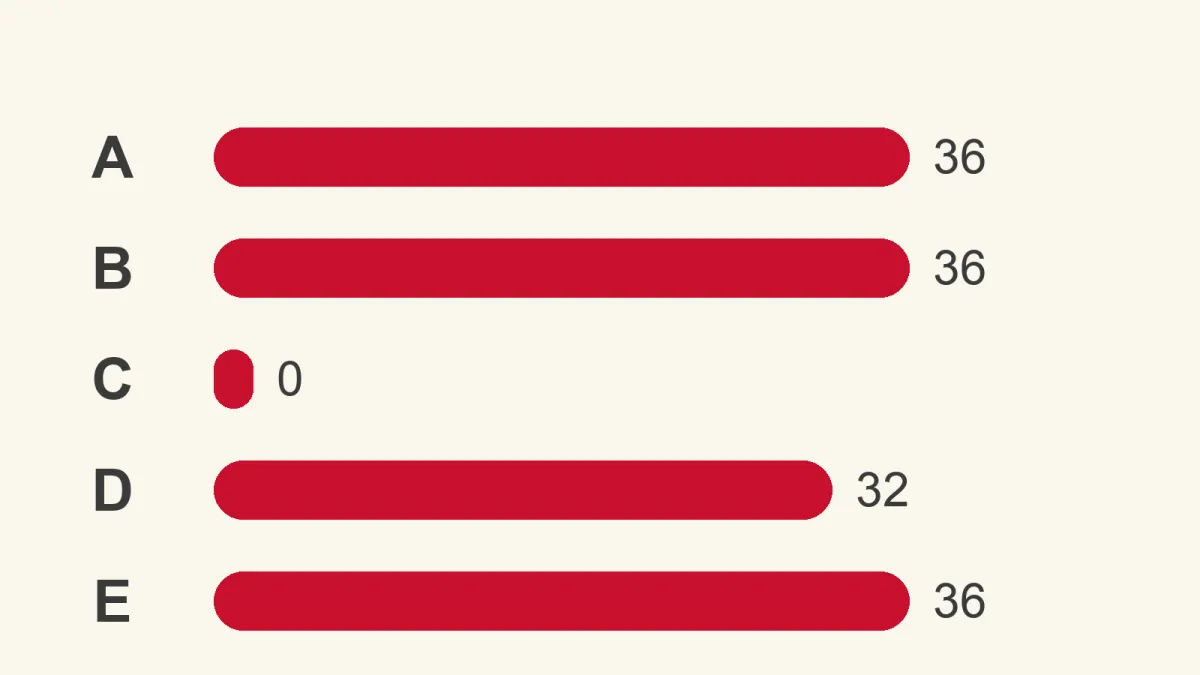
Profile: First study permit approved February 2025. 2-year program started September 2025. First 4 months online from Nigeria (September to December 2025) waiting on a delayed flight, then in person from January 2026.
Lock-in: February 2025. Cohort: 3.
Math: The 4 months online from abroad do not count toward PGWP length. The student is under 50% (4 of 24 months is 17%), so the application is eligible, but the 4 months are deducted. A 2-year program normally gives 36 months. Subtract the 4 deducted: 32 months.
PGWP awarded: 32 months (roughly 2 years 8 months).
Scenario E: Full program online from China, never set foot in Canada until PGWP
Profile: First study permit approved March 2020. 2-year DLI program started September 2020. Entire 24-month program online from China. Arrived in Canada in August 2022 only to apply for the PGWP at the port of entry.
Lock-in: March 2020. Cohort: 1.
Math: The whole program sits inside the March 2020 to August 31, 2022 window (100% online from outside Canada permitted) and inside the December 31, 2023 safe-harbor. None deducted. Program 2 years, so PGWP is 3 years.
PGWP awarded: 3 years. If your situation matches this profile, you are fine. Confirm your lock-in date in your own documents using the steps below, then apply.
How to Find Your Lock-In Date in Your Own Documents
You do not need a consultant for this. Two documents, five minutes.
- Pull your first study permit approval letter. Log into your GCKey account at the IRCC online portal. Find the approval letter (sometimes called the “letter of introduction” or “POE letter”). The date at the top is your study permit approval date.
- Pull your Letter of Acceptance (LOA) from your DLI. Find the official program start date. If your school moved your start date (deferral), use the actual date your program started, per your enrolment record.
- Compare the two dates. Whichever is earlier is your lock-in date.
- Check which cohort it falls into using the table above.
- Sanity check with your GCMS notes. Submit an ATIP request for your GCMS notes to see exactly what IRCC has on file. The notes typically show the lock-in date the officer recorded.
Edge Cases That Shift Your Lock-In Date
The clean cases are easy. Most real files are messier. The patterns below come up the most.
Program switch at the same DLI
If you switched programs at the same school and did not need a new study permit, your lock-in stays at your first study permit approval date. The program length resets to the length of the new program, but the cohort does not change.
DLI transfer mid-program
Since November 8, 2024, IRCC requires students transferring between DLIs to apply for a new study permit. This is the DLI school transfer rule that took effect November 8, 2024. If your new permit is approved in 2025, your lock-in on the post-transfer studies can re-trigger to that new permit date. Get a licensed RCIC opinion if you switched schools after November 2024 and the lock-in question matters for your math.
Refused study permit followed by reapproval
Your lock-in is the date of the eventually approved permit, not the refused application. If your first application was refused in May 2022 and the reapplied one approved October 2022, your lock-in is October 2022 (Cohort 2), not May 2022 (Cohort 1).
Deferred program start
If your permit was approved before the program was supposed to start and you deferred, your lock-in is still the permit approval date. Deferral does not push the lock-in forward.
Distance program from a non-DLI
If your school is not on the DLI list at the time you graduate, you are not eligible for a PGWP. Lock-in does not matter. DLI status is the gate.
Hybrid programs and online classes taken from inside Canada
Online time from inside Canada is in-Canada study. It counts toward the 50% requirement and is not deducted. Only online time from outside Canada is at issue. Keep proof of your physical location during the online portions (lease, T4s, transit cards, anything dated).
What To Do If Your PGWP Came Back Shorter Than Expected
A shorter PGWP is not the end. Work through these steps in order.
- Request GCMS notes. The decision letter will not show you the officer’s math. The GCMS notes will. Without that, you cannot argue.
- Identify the error, if any. Compare the officer’s lock-in date against your own documents. The most common mistakes are using the wrong “first” study permit and miscounting the online-from-abroad months (officer included online time from inside Canada).
- File a reconsideration request. There is no formal appeal for a PGWP decision. Reconsideration is the route. File a written request to the office that issued the decision, attach the documents that prove your dates and locations, and ask for the decision to be reviewed. The same mechanism is covered in the IRCC refusal letter decoder.
- Get a DLI letter, if it helps. If your school can confirm in writing that COVID-era travel restrictions forced your online cohort, attach it. Useful only inside the Cohort 1 or Cohort 2 safe-harbor windows.
- Watch your status timing. If your study permit has expired and you are on maintained status, the clock matters. If your status lapses, you have 90 days to apply for restoration. If your completion letter has not arrived yet and your permit is close to expiring, also know the 180-day post-completion PGWP application window so you do not miss your filing deadline.
- Know when to call an RCIC. If the officer’s calculation is correct and your dates put you on the wrong side of a hard rule, a consultant cannot rescue the application. If the calculation is clearly wrong or the file is complex, a single paid consultation is worth it. Consult a licensed professional for advice specific to your situation.
How a Shorter PGWP Affects Your PR Pathway
The reason this matters is the PR pathway. The Canadian Experience Class (CEC) stream of Express Entry requires 12 months of qualifying Canadian work experience in the last 3 years. A 32-month PGWP still clears that comfortably. A 9-month PGWP does not. A Scenario C zero-PGWP closes the door entirely.
If you are a Cohort 3 student, the field-of-study eligibility check matters too. Walk your program code through the PGWP CIP-code decision tree before you apply, because an ineligible field of study is now the most common reason a Cohort 3 PGWP gets refused outright.
Realistic backup plans for a shortened PGWP:
- Provincial Nominee Program (PNP). Many provinces have streams that take less Canadian work experience than CEC.
- Bridging Open Work Permit. If your PR application is filed and your PGWP is expiring, the Bridging Open Work Permit keeps you working while you wait.
- LMIA-supported closed work permit. If your employer files a Labour Market Impact Assessment, that route bypasses the PGWP timeline.
- PGWP language requirement. PGWPs applied for on or after November 1, 2024 need CLB or NCLC 7 in all four skills (bachelor’s, master’s, doctoral). The IELTS to CLB conversion guide covers the math.
A tighter timeline is not a closed door.
FAQ
I studied my whole program online from China during COVID. Do I still get a PGWP?
Yes, if your lock-in date is before September 1, 2022 and your online time sat inside the March 2020 to August 31, 2022 window. Time before December 31, 2023 is not deducted. Scenario E walks through the exact case.
What date does IRCC use to decide which COVID rules apply to me?
Your lock-in date: the earlier of your first study permit approval date or your program start date.
Is the lock-in date my study permit approval date or my program start date?
Whichever came first. If your permit was approved before classes started, that approval date is your lock-in. If you started classes before your permit was approved, the program start date locks you in.
My program was 2 years but I studied 14 months from abroad. Am I disqualified?
If your lock-in date is in Cohort 2 (September 1, 2022 to August 31, 2024) and 14 months is more than 50% of your program, yes. The 50% in-Canada rule is a ceiling, not a guideline. Scenario C walks through the math.
If I lose PGWP time, can I still apply for PR through CEC?
Possibly. CEC needs 12 months of qualifying Canadian work experience in the last 3 years. Backup plans: PNP streams, a Bridging Open Work Permit if your PR application is already filed, and LMIA-supported closed work permits.
Will IRCC tell me how they calculated my PGWP length?
Not in the decision letter, but you can request GCMS notes through an ATIP request. The notes show the officer’s calculation, including any time deducted.
What if I had multiple study permits? Which one is the lock-in date?
Your first approved permit for the program you graduated from. A previously refused application does not count. A prior permit for a different program at a different DLI does not count for this program’s PGWP.
Does online study I took from inside Canada count differently than from abroad?
Yes. Online time from inside Canada counts as in-Canada study. It counts toward the 50% requirement and is not deducted. Only online time from outside Canada is at issue.
This article explains current IRCC policy as of 2026, based on the official transition notice. It is not legal advice. Consult a licensed RCIC or immigration lawyer for advice specific to your situation.