
It is 11 pm and Arjun, 22, is staring at three things on his kitchen table. The printed IRCC study permit says he may work 20 hours per week off campus. His college international advisor’s email from last Tuesday says the same. His Uber Eats dashboard shows 23 hours of paid trips last week.
His coworker at the warehouse swears the rule went up to 24. A YouTube video from 2022 says 40 hours over the summer. He has not slept in three nights because he does not know which number is true, and the wrong one ends his PGWP.
The bottom line, current as of June 1, 2026: the off-campus work cap is 24 hours per week. IRCC has published a sentence on canada.ca confirming that older permits printed with “20 hours” still allow 24. The physical document is a snapshot of the rule on its issue date; the regulation governs your conduct now. This article delivers the verbatim IRCC quote and IRPR 186(v) citation, a four-window timeline so you can audit every week of your work history, and a record-keeping template plus an honest consequence ladder.
The Short Answer: 24 Hours per Week, Even If Your Permit Says 20
The number you can act on this week is 24, no matter which DLI you attend, which province you live in, or what your photocopied permit prints in black ink. If your study permit says 20 hours, the current regulation overrides it and the canada.ca clarification confirms the higher cap.
IRCC’s exact published sentence, from the official Work off campus as an international student page on canada.ca:
“If your current study permit says that you may only work 20 hours per week off campus, you’re allowed to work up to 24 hours per week as long as you continue to meet the eligibility requirements.”
That sentence is the official fix. The legal authority behind it is section 186(v) of the Immigration and Refugee Protection Regulations, IRPR 186(v), which is the regulation IRCC cites for off-campus work without a separate permit. The section number, the Nov 8, 2024 effective date, and the 24-hour figure are confirmed across multiple official sources.
Permits issued before Nov 8, 2024 do not need to be reissued. The canada.ca clarification is the official update. Memorize three numbers: 24 hours per week during academic sessions, full-time during eligible scheduled breaks, zero before your program officially starts.
Why Your Permit Document Is Technically Out of Date (And Why That Is Okay)
Permits are issued under the regulation; the regulation is not issued under the permit. When IRCC printed “20 hours per week” on millions of permits before Nov 8, 2024, that text accurately paraphrased the rule on the issue date. The rule changed. The paper did not. IRCC chose not to reissue, because the alternative was reprinting roughly a million documents. The printed permit remains valid for stay and study; the 20-hour figure is simply overridden by the current regulation, and no fee or new permit is required to use the 24-hour cap.
At a Tim Hortons in Brampton last fall, an international student two months from PGWP eligibility asked the manager for a 23-hour week. The manager pulled the permit photocopy, pointed at “20 hours per week,” and said no. The student emailed the canada.ca URL with the quoted sentence that night. The next schedule showed 23 hours.
That is the move. Save the URL. Screenshot the quote. Date it. You are not arguing with anyone; you are forwarding the government’s own clarification.
The Four Windows: Which Off-Campus Work Limit Applied to Which Week of Your Work History
If you arrived in 2023 or 2024, your work history spans more than one rule. To audit yourself honestly, you need to know which limit applied to which week.
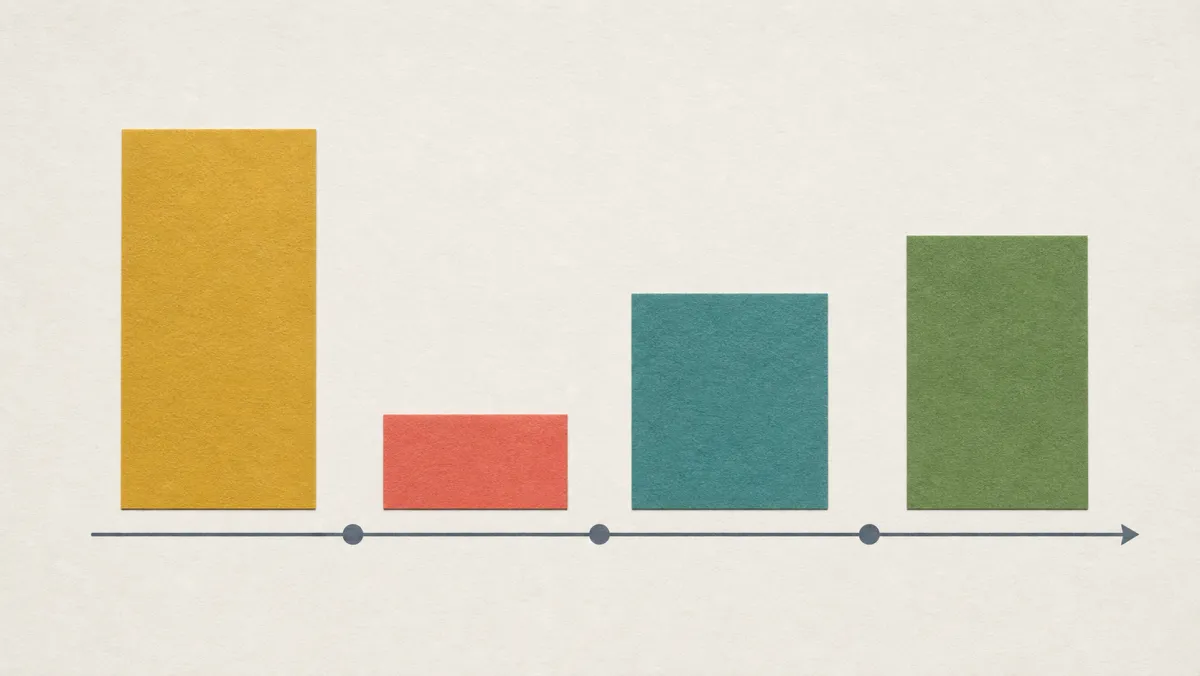
The four windows:
| Window | Off-Campus Limit | Source |
|---|---|---|
| Before Apr 30, 2024 | Unlimited hours (COVID temporary public policy) | IRCC news release, Apr 2024 |
| May 1, 2024 to Nov 7, 2024 | 20 hours per week (COVID policy expired; old IRPR limit restored) | IRCC news release, Apr 2024 |
| Nov 8, 2024 onward | 24 hours per week during academic sessions | canada.ca off-campus work page |
| Scheduled academic breaks (any year) | Unlimited, if eligible (see Scheduled Breaks: When You Can Legally Work Full-Time) | IRPR 186(v); canada.ca |
Two details that trip students up. First, the 24-hour limit is a strict weekly cap, not a monthly average. 32 one week and 16 the next is a violation, even though the average is 24. Plan weekly, not monthly. Second, the May 1 to Nov 7, 2024 window still matters if you were earning then; the 20-hour cap applied to those weeks. The section What to Do If You Already Worked Too Many Hours covers next steps.
For a sense of what 24 hours per week actually pays after tax and rent, see our companion piece on part-time earnings for international students in Canada in 2026.
What Actually Counts as “Work” Under the 24-Hour Cap
IRCC’s definition of work is broader than most students assume. It captures any activity that earns wages or commission, plus any activity that competes with the Canadian labour market or that would normally be paid, even when you do it for free.
| Activity | Counts toward 24h? | Notes |
|---|---|---|
| Paid retail, food, or warehouse job | Yes | Every minute on the clock counts. Tipped hours count. On-call hours where you are required to be available count. |
| Uber, DoorDash, Instacart, Skip (paid trip time) | Yes | Time actively on a trip or delivery is paid commission-earning time. |
| Uber, DoorDash, Instacart, Skip (idle “online” time) | No, with caveat | Time logged in but not on a trip does not count. The app will not separate this for you, so keep your own log. |
| Self-employment, Fiverr, Upwork, online tutoring | Yes | All paid hours count. Track time per client. |
| Unpaid internship in a normally-paid role | Yes | Fails the labour-market-competition test, so it counts toward your 24. May also require a co-op work permit on its own. |
| Casual community volunteering | No | Crisis line, big brother/big sister, food bank: does not compete with paid roles. |
| On-campus work for your DLI | No (separate authorization) | No weekly cap. See below. |
| Remote work for a foreign employer while in Canada | Yes | Physical presence in Canada is what triggers the cap, not where your employer is based. |
Three rules of thumb that resolve most edge cases:
- If money lands in your account because of the activity, it counts.
- If a Canadian would normally be paid for the role, the labour-market-competition test says it counts even when you do it for free.
- If you are physically in Canada when you do the work, your employer’s country does not matter.
On-campus work is a separate authorization with no weekly cap. Eligibility is narrow: the employer must be the institution that holds your study permit, an academic department, the student union, or a contractor on campus serving students. A Subway in a campus food court might be on-campus if it is the contracted food vendor; it might not be if it is an independent franchise. Verify with your DLI.
For how on-campus, off-campus, and co-op authorizations interact, see our breakdown of co-op work permits and what they actually mean for your PR application.
Scheduled Breaks: When You Can Legally Work Full-Time
Full-time off-campus work during a scheduled break is the one big release valve in the regulation. Four conditions must all be true:
- You were enrolled full-time at your DLI immediately before the break.
- You will be enrolled full-time at your DLI immediately after the break.
- The break appears on the institution’s official academic calendar (winter, summer, reading week).
- The break lasts at least 7 consecutive days.
Per IRCC help centre answer 499, all four must be met. A personal break, unauthorized leave, or deferral does not qualify. If you graduate at the end of the spring term, the summer is not a “scheduled break” for you because there is no enrolment immediately after. An annual cap of 180 days of unlimited-hour break work per calendar year also applies; for a typical student with a 4-month summer and a 2-week winter break, this is rarely binding.
The biggest landing-week trap: you cannot work before your program officially begins, even with a valid study permit and a SIN. IRCC help centre answer 1471 is explicit. A student who lands two weeks early, gets a SIN, and starts DoorDash on day 3 is working without authorization. Those days have to be disclosed on the PGWP application.
If the SIN application or first paycheque is on your mind, our SIN guide walks through what the SIN does and does not authorize.
How IRCC Actually Finds Out How Many Hours You Worked
How could IRCC ever know if you worked 25 instead of 24? The honest answer separates documented procedure from what immigration lawyers consistently describe.
Documented in public IRCC procedure:
- Designated Learning Institutions submit compliance reports twice yearly. These reports confirm whether you are enrolled and in full-time status. Enrolment gaps surface here.
- PGWP applications, study permit extension applications, and PR applications include declarations about your prior work, including whether you respected the conditions of your study permit. Lying on these forms is misrepresentation under IRPA section 40.
- Border officers can ask about employment history when you re-enter Canada after a trip abroad. Your phone, your laptop, and your social media are all fair game at a port of entry.
Not documented in public IRCC procedure, but described consistently by immigration lawyers:
- IRCC can request CRA data to cross-reference T4 income against the hours your permit allowed. The exact internal method has not been published, but immigration counsel discuss this as standard practice in PGWP and PR adjudications. Treat it as real; treat the specific procedure as unconfirmed.
The practical implication: anything on your T4 is visible to IRCC if they choose to look. At Ontario’s general minimum wage of $17.60/hour (effective Oct 1, 2025), 24 hours per week across 16 academic weeks yields about $6,758 before tax. A T4 showing $35,000 over a 4-month academic session is mathematically incompatible with the cap and will draw scrutiny. IRCC does not run a live hour tracker; the paper trail (T4, DLI enrolment record, your own declarations) is what makes overages visible.
The Consequence Ladder If You Go Over 24 Hours
Consequences are real and calibrated. IRCC applies discretion case by case: a single 26-hour week from a closing shift is not the same as a sustained 32-hour pattern across a semester. The escalation order:
- Loss of student status under IRPA section 41 for failing to comply with permit conditions. A one-week overage documented the same day is treated very differently from a multi-week pattern concealed on a PGWP application.
- Ineligibility for future study or work permits, including PGWP. The PGWP application asks whether you complied with study permit conditions; a documented overage can be cited as grounds for refusal.
- Possible removal order if status is lost and not restored. Rare for a one-time minor overage, far more likely for sustained or undeclared violations.
- 5-year inadmissibility bar under IRPA section 40 if misrepresentation is alleged. Misrepresentation is alleged when an applicant denies, omits, or falsifies information on an application. The penalty is exclusion from Canada for 5 years, plus the original status loss.
If a violation is already in your history, the CanadaSmarts study permit extension and maintained status guide covers how status, restoration, and overage disclosure interact.
Immigration counsel (see Matkowsky on PGWP refusals) describe the pattern: refusals that stick are sustained semester-long overages with T4 contradiction and no disclosure. Refusals that get overturned are isolated incidents with documented cause and proactive disclosure. Consult a licensed Regulated Canadian Immigration Consultant or immigration lawyer for advice specific to your situation.
What to Do If You Already Worked Too Many Hours
Two scenarios cover most readers who landed on this article because something is already wrong. Either you worked more than 20 hours per week between May 1 and Nov 7, 2024 when the limit was 20, or you worked more than 24 hours per week any time from Nov 8, 2024 onward.
The Nov 8, 2024 increase is not retroactive. Working 24 hours in October 2024 was a violation even though the same number today is compliant. IRCC has not issued public guidance on lookback enforcement for the May to Nov 2024 window. Some students who worked one or two weeks above 20 that summer have applied successfully for PGWP with disclosure and explanation. Others with sustained patterns have not.
The action sequence if you suspect an overage:
- Pull every paystub and tax slip. Reconstruct a week-by-week log honestly. Round nothing.
- Distinguish paid hours from idle gig-app time. If Uber Eats shows 23 hours online but only 17 on trips, document the 17. Save the per-trip screenshots.
- If the overage was isolated and externally caused, document the cause the same day. Email your employer: “To confirm, you scheduled me for a 26-hour week of Nov 14, due to the closing shift on Saturday. I usually work 23.” That email is evidence.
- If the overage was sustained, book a 30-minute paid consultation with a CICC-regulated immigration consultant or lawyer before submitting any application that asks about prior work. The consultation is cheaper than a refusal.
- Disclose, do not conceal. Misrepresentation triggers the 5-year bar described in the consequence ladder above. IRCC has discretion when you disclose; none when they catch you concealing.
From this week forward, the simplest defense is a weekly hours log. Copy the table below into Google Sheets or Notion and fill it in every Sunday. Two minutes a week.
| Week-of date | Employer | Hours worked (paid only) | On-campus (Y/N) | Notes / evidence |
|---|---|---|---|---|
| 2026-06-01 | Tim Hortons (Brampton) | 22.5 | N | Pay period closes Sat. Schedule screenshot saved. |
| 2026-06-08 | Tim Hortons + Uber Eats | 23.75 | N | Tim 18h + Uber 5.75h paid trip time only. Earnings statement saved. |
| (your row) | ||||
| (your row) |
If you ever face a refusal letter on a PGWP or study permit extension citing work-hour compliance, the CanadaSmarts refusal letter decoder walks through how to read the codes IRCC uses and what an honest reconsideration request looks like.
Frequently Asked Questions
How many hours can I actually work on a study permit in Canada in 2026, 20 or 24?
24, even if your permit says 20. The canada.ca off-campus work page confirms older 20-hour permits still allow up to 24 hours. The cap took effect Nov 8, 2024.
What happens if I work more than 24 hours on my study permit?
You can lose student status under IRPA section 41. Downstream effects: PGWP ineligibility, possible removal order, and if misrepresentation under IRPA section 40 is alleged, a 5-year inadmissibility bar. IRCC has discretion, but discretion is not a guarantee.
Can I work before my classes start if I arrive early in Canada?
No. Even with a valid permit and SIN, off-campus work cannot start until your program officially begins. IRCC help centre answer 1471 is explicit. Pre-start days will have to be disclosed on the PGWP application.
Does gig work (Uber, DoorDash, Instacart, Fiverr) count toward my 24 hours?
Yes, but only paid or commission-earning time. For ride-share and delivery apps, only minutes on a trip count; idle “online” time does not. The apps will not separate this for you, so keep your own per-trip log. All Fiverr and Upwork paid hours count.
If my permit says 20 hours, why does everyone now say 24?
IRPR 186(v) was updated effective Nov 8, 2024. IRCC chose not to reissue the millions of permits already printed with “20 hours” on them. The canada.ca clarification is the official patch.
How does IRCC actually find out how many hours I worked?
Four channels: DLI compliance reports submitted twice yearly, declarations on PGWP and PR applications, border officer questioning, and (as immigration lawyers consistently describe) CRA T4 cross-referencing during adjudication. The exact T4 methodology is not publicly documented.
Can I work full-time during scheduled breaks like reading week and the summer?
Yes, if four conditions are met: enrolled full-time immediately before and after, the break is on the institution’s official calendar, and it lasts at least 7 consecutive days. Annual cap is 180 days per calendar year (IRCC help centre answer 499).
Do unpaid internships count toward the off-campus work limit?
It depends on the labour-market-competition test. Casual community volunteering (crisis line, food bank) does not count. An unpaid internship at an organization that would normally pay for the role does count, and may also require a separate co-op work permit. The IRCC volunteer-work guidance walks through the test.
Your Next Three Actions
Three things before you close this tab:
- Save the canada.ca off-campus work URL and the quoted sentence into your phone notes, with today’s date. Send it to any employer or advisor who quotes 20.
- Open Google Sheets, paste the weekly hours template from the section above, and fill in this week’s row. Set a recurring Sunday-night reminder.
- Subscribe to the CanadaSmarts newsletter to get a one-email alert the next time IRCC changes the off-campus rule. The 20-to-24 change had a 6-month signal. The next one might not.
The contradiction between your printed permit and the current regulation is real. The fix is sourced, current, and free. Track your weeks honestly, save the proof, and you will not need to find this article a second time.