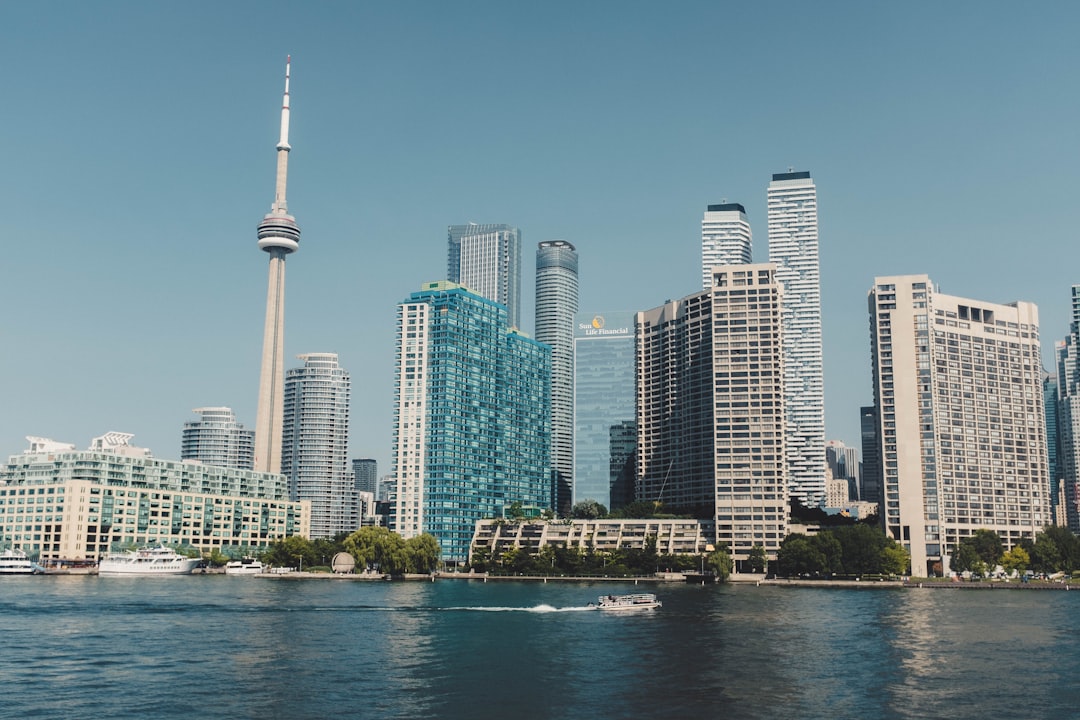
GIC payouts from your Canadian study permit deposit land at roughly CAD 1,150 per month after the initial CAD 2,000 disbursement. A shared student room in Toronto costs CAD 900 to CAD 1,500 per month. After rent, you are left with somewhere between zero and CAD 250 for groceries, transit, your phone plan, and everything else you need to survive. Vancouver makes the math worse. Montreal might actually let you make it through the year. When you compare the cost of living in Toronto, Vancouver, and Montreal as a student, one question towers over everything else: how many months will your money last?
Most university websites quote a single “estimated living cost” number that looks reasonable until you arrive and realize it was calculated in 2019, did not account for shared housing bidding wars, and assumed you would never eat outside your kitchen. This is the comparison those pages will never publish: real 2026 numbers, three budget tiers, the actual GIC shortfall per city, and the part-time income math that determines whether you break even or run out of money before finals.
Why the GIC Number on the IRCC Website Does Not Tell You the Full Story
As of September 1, 2025, IRCC requires international students to deposit CAD 22,895 into a GIC as proof of financial support. That number stays the same whether you study in downtown Toronto or rural Nova Scotia. IRCC does not adjust for city. It does not adjust for program length beyond the standard 12-month calculation. And it does not warn you that the payout structure front-loads your money in a way that feels generous in month one and painful by month six.
How does the typical GIC payout actually work? You receive an initial lump sum of approximately CAD 2,000 when you arrive and activate the account. Over the remaining months, the leftover CAD 20,895 gets divided into monthly installments of roughly CAD 1,150 to CAD 1,200. Some banks pay slightly more per month by offering fewer total months of payouts, but the ballpark stays the same.
Why does this matter? Because the Numbeo cost of living index scores Toronto at 54.7, Vancouver at 57.3, and Montreal at 45.8 (excluding rent). Vancouver is the most expensive for daily expenses. Toronto is close behind. Montreal sits roughly 21% lower than Vancouver when you factor in rent. That single GIC number from IRCC treats all three cities as identical. They are not even close.
Rent is where the real damage happens, and that single line item will determine whether your budget survives or collapses.
Rent in Toronto vs. Vancouver vs. Montreal: The Number That Decides Everything
Rent is not just your biggest expense. In Toronto and Vancouver, it is your budget. Everything else gets whatever is left over, if anything is left over at all.

One-bedroom apartments in Toronto’s city centre run CAD 2,078 to CAD 2,600 per month in 2026. Vancouver is even higher at CAD 2,223 to CAD 2,800. Montreal sits at CAD 1,688 to CAD 1,900. No student relying on a GIC budget should be looking at a one-bedroom apartment. What actually matters is shared student housing.
Shared housing (a room in a 2 to 4 bedroom apartment split with roommates) runs:
- Toronto: CAD 900 to CAD 1,500 per month, depending on distance from campus and neighbourhood. Areas like Scarborough and North York sit at the lower end. Anything near the University of Toronto St. George campus or Ryerson pushes toward CAD 1,300 or higher.
- Vancouver: CAD 900 to CAD 1,500 per month. Burnaby and Surrey offer the lower range. Kitsilano and the areas near UBC push past CAD 1,200 easily.
- Montreal: CAD 500 to CAD 900 per month. Cote-des-Neiges (near Universite de Montreal), the Plateau, and the McGill ghetto near downtown offer shared rooms starting around CAD 550 to CAD 700. That is 40 to 50% cheaper than the same arrangement in Toronto or Vancouver.
On-campus residences range from CAD 8,000 to CAD 16,000 per academic year (8 months), which translates to CAD 1,000 to CAD 2,000 per month. Most residences are only available for first-year students, and meal plan requirements can add another CAD 3,000 to CAD 5,500 per year.
In all three cities, landlords typically require first and last month’s rent upfront in Ontario, a security deposit equivalent to one month’s rent in BC, and first month plus a potential damage deposit in Quebec. Your initial CAD 2,000 GIC disbursement may not even cover the move-in cost for a shared room in Toronto.
Picture a student arriving in Toronto expecting the GIC to handle rent. A shared room near UofT takes 75 to 80% of that monthly payout. After rent, CAD 1,150 becomes CAD 50 to CAD 250. For food, transit, phone, laundry, and every other expense for the entire month. By the time that realization hits during the first week, the lease is already signed.
Building out the full monthly picture line by line makes the gap between cities impossible to ignore.
Student Cost of Living by City in Canada: Frugal, Moderate, and Comfortable Budgets
Below are monthly costs across three budget tiers: frugal (bare-minimum student survival), moderate (some social life, occasional dining out), and comfortable (not luxury, just not constantly counting coins). All figures are in CAD for 2026.

Toronto Monthly Budget
- Rent (shared): Frugal CAD 900 | Moderate CAD 1,100 | Comfortable CAD 1,400
- Groceries: Frugal CAD 350 | Moderate CAD 425 | Comfortable CAD 500
- Transit (TTC post-secondary pass): CAD 128.15 across all tiers
- Phone plan: CAD 40 | CAD 50 | CAD 65
- Internet (share of house plan): CAD 20 | CAD 25 | CAD 30
- Entertainment and dining out: CAD 50 | CAD 150 | CAD 300
- Miscellaneous (toiletries, clothing, school supplies): CAD 75 | CAD 100 | CAD 150
- Total: Frugal ~CAD 1,563 | Moderate ~CAD 1,978 | Comfortable ~CAD 2,573
Vancouver Monthly Budget
- Rent (shared): Frugal CAD 950 | Moderate CAD 1,150 | Comfortable CAD 1,450
- Groceries: Frugal CAD 350 | Moderate CAD 425 | Comfortable CAD 500
- Transit (U-Pass BC): CAD 46.90 across all tiers
- Phone plan: CAD 40 | CAD 50 | CAD 65
- Internet (share of house plan): CAD 20 | CAD 25 | CAD 30
- Entertainment and dining out: CAD 50 | CAD 150 | CAD 300
- Miscellaneous: CAD 75 | CAD 100 | CAD 150
- Total: Frugal ~CAD 1,529 | Moderate ~CAD 1,955 | Comfortable ~CAD 2,550
Montreal Monthly Budget
- Rent (shared): Frugal CAD 575 | Moderate CAD 700 | Comfortable CAD 900
- Groceries: Frugal CAD 300 | Moderate CAD 375 | Comfortable CAD 450
- Transit (STM reduced): CAD 62.75 across all tiers
- Phone plan: CAD 35 | CAD 45 | CAD 60
- Internet (share of house plan): CAD 15 | CAD 20 | CAD 25
- Entertainment and dining out: CAD 40 | CAD 120 | CAD 250
- Miscellaneous: CAD 60 | CAD 85 | CAD 125
- Total: Frugal ~CAD 1,088 | Moderate ~CAD 1,408 | Comfortable ~CAD 1,873
Two things jump out immediately. First, Vancouver’s U-Pass saves students over CAD 80 per month compared to Toronto’s TTC pass. That one line item offsets some of Vancouver’s higher rent. Second, Montreal’s total frugal budget is roughly CAD 475 less per month than Toronto’s and CAD 441 less than Vancouver’s. Over 12 months, that adds up to CAD 5,300 to CAD 5,700 in savings.
Those budget totals set up the most important calculation in this entire article: how much of the gap your GIC actually covers, and how many months you have before the money runs out.
How Much Your GIC Monthly Payout Actually Covers in Each City
With a GIC monthly payout of approximately CAD 1,150, the cost of living gap between these three Canadian cities becomes brutally clear:
- Toronto (frugal): Monthly budget CAD 1,563 minus GIC payout CAD 1,150 = gap of CAD 413 per month. Your GIC funds (including the initial CAD 2,000) run out around month 8.
- Vancouver (frugal): Monthly budget CAD 1,529 minus GIC payout CAD 1,150 = gap of CAD 379 per month. Your GIC runs out around month 8 as well, though the slightly lower transit cost gives you a few extra weeks compared to Toronto.
- Montreal (frugal): Monthly budget CAD 1,088 minus GIC payout CAD 1,150 = surplus of CAD 62 per month. Your GIC can theoretically last all 12 months with a small buffer remaining.
At moderate spending levels, the picture worsens dramatically:
- Toronto (moderate): Gap of CAD 828 per month. GIC runs out by month 6 to 7.
- Vancouver (moderate): Gap of CAD 805 per month. GIC runs out by month 7.
- Montreal (moderate): Gap of CAD 258 per month. GIC runs out by month 10.
This is why Toronto drains your GIC by month 8, Vancouver by month 7 (at moderate spending), and Montreal might last all 12. IRCC designed the GIC as proof of funds, not as a living budget. In Toronto and Vancouver, it is structurally insufficient for a full year of student life, even at the most frugal level. You need additional income.
Can 24 hours of part-time work per week close that gap?
Part-Time Work: Can 24 Hours a Week Close the Gap?
International students on a valid study permit can work up to 24 hours per week during academic sessions and full-time during scheduled breaks. Under the IRCC off-campus work authorization, students at DLI-listed schools qualify automatically, but you cannot work before your program starts.
Provincial minimum wages as of 2026:
- Ontario: CAD 17.60 per hour
- British Columbia: CAD 17.85 per hour (BC Employment Standards)
- Quebec: CAD 16.10 per hour
At 24 hours per week (approximately 96 hours per month), gross monthly earnings look like this:
- Toronto: CAD 1,690 gross (approximately CAD 1,420 to CAD 1,500 after basic tax and CPP deductions)
- Vancouver: CAD 1,714 gross (approximately CAD 1,440 to CAD 1,520 after deductions)
- Montreal: CAD 1,546 gross (approximately CAD 1,300 to CAD 1,370 after deductions)
Combining GIC payouts with take-home part-time earnings against frugal budgets changes the picture entirely:
- Toronto: CAD 1,150 + CAD 1,450 (avg take-home) = CAD 2,600 total income vs. CAD 1,563 frugal budget. Surplus of roughly CAD 1,037 per month. Even the comfortable tier (CAD 2,573) is covered.
- Vancouver: CAD 1,150 + CAD 1,480 = CAD 2,630 total income vs. CAD 1,529 frugal budget. Surplus of roughly CAD 1,101. Comfortable tier (CAD 2,550) still works, barely.
- Montreal: CAD 1,150 + CAD 1,335 = CAD 2,485 total income vs. CAD 1,088 frugal budget. Surplus of roughly CAD 1,397. Even the comfortable tier (CAD 1,873) leaves you with over CAD 600 per month.
For a deeper breakdown of how to build a realistic Toronto student budget, including semester-by-semester planning, read the full budgeting guide.
On paper, part-time work closes the gap in all three cities at frugal spending. Reality is less forgiving. Consider a student who arrives in Toronto in early September. Classes start mid-September, and job hunting begins the same week. Most students do not land their first part-time position until October or November, meaning 6 to 8 weeks of GIC-only income while expenses hit at full speed. If your course schedule includes heavy labs or mandatory tutorials, realistic weekly hours drop to 12 to 16, cutting those earnings by a third or more.
Montreal is the only city where a student can survive on the GIC alone without working. In Toronto and Vancouver, part-time work is not optional. It is a financial requirement.
Montreal wins the budget math on paper. What the spreadsheet cannot show you is what happens when you walk into a Montreal job interview without speaking French, or what a first Canadian winter costs before you even start classes.
Hidden Trade-Offs Nobody Mentions: French, Jobs, and Life After Graduation
Montreal is the cheapest city by a wide margin. Cost is not the only variable, though, and some trade-offs only become visible after you have already enrolled.

French and Your Job Prospects in Montreal
McGill University and Concordia University operate in English. You can complete your degree, attend lectures, and submit assignments entirely in English. Daily life in central Montreal is also manageable in English. Part-time job postings in Montreal, however, overwhelmingly require “bilingual (French/English)” or “French essential.” Retail, food service, and customer-facing roles, which make up the bulk of student employment, default to French-first. Without conversational French, your job pool shrinks by 40 to 60% compared to what English-only students access in Toronto or Vancouver.
After graduation, the PGWP allows you to work anywhere in Canada, so you are not locked into Quebec. If you want to stay in Montreal, Quebec’s Bill 96 strengthens French-language requirements in workplaces with 25 or more employees. Learning French is a real long-term career advantage, but it is a 6 to 12 month investment on top of your academic workload.
Transit Costs and Vancouver’s U-Pass Advantage
Vancouver’s U-Pass BC program charges students CAD 46.90 per month for unlimited transit across all zones, including the SkyTrain and SeaBus. Compare that to Toronto’s TTC post-secondary pass at CAD 128.15. Over 12 months, Vancouver students save roughly CAD 974 on transit alone. Montreal’s STM reduced fare is CAD 62.75, sitting between the two.
Post-Graduation Job Markets
Toronto has the largest concentration of corporate headquarters, financial institutions, and tech companies in Canada. Greater Toronto Area output accounts for roughly 20% of Canada’s GDP. For PGWP holders looking for sponsored employment or pathways to PR through Express Entry, Toronto offers the widest selection of NOC-qualifying positions.
Vancouver’s job market is strong in tech, film production, natural resources, and tourism. BC’s Provincial Nominee Program (PNP) has a dedicated international graduate stream that provides a faster PR pathway for students who studied and worked in BC.
Montreal’s job market is competitive in aerospace (Bombardier, CAE), gaming (Ubisoft, EA), AI research, and healthcare. French proficiency is a practical requirement for most roles outside of pure tech.
Seasonal Costs Most Guides Skip
Winter gear is a real expense for students arriving from tropical or subtropical climates. Budget CAD 200 to CAD 400 for a jacket, boots, gloves, and a hat. Montreal winters are the coldest of the three cities (average January temperature around minus 10 Celsius), but Hydro-Quebec provides some of the cheapest electricity in North America, keeping heating bills lower than Ontario or BC equivalents. Summer brings an advantage in all three cities: many students sublet their rooms for 30 to 50% discounts in May through August, especially in Montreal where the July 1 “moving day” tradition creates a wave of vacancies.
Cost savings in one category can vanish in another, so choosing a city involves more than just the rent line. Before you decide, you also need to know about first-month expenses that catch almost everyone off guard.
First-Month Shock Costs: A Budget Nobody Warns You About
Your initial CAD 2,000 GIC disbursement feels generous until you list what month one actually costs. Your first 7 days in Canada will cost more than you think, and expenses do not slow down after that first week.
Estimated first-month additional costs beyond regular rent:
- Security deposit / last month’s rent: CAD 500 to CAD 1,500 (one additional month’s rent in most provinces)
- Winter gear (as outlined in the seasonal costs section above): CAD 200 to CAD 400 if arriving September through March
- Phone plan activation and SIM: CAD 40 to CAD 65
- Bedding, pillows, towels: CAD 80 to CAD 150
- Basic kitchenware (pot, pan, utensils, plates): CAD 50 to CAD 100
- Initial grocery stock (spices, oil, rice, staples): CAD 80 to CAD 120
- Transit card or pass (first month): CAD 44 to CAD 128
- School supplies and printing: CAD 30 to CAD 60
Total first-month add-on costs range from roughly CAD 1,024 to CAD 2,523 on top of your regular rent. In Toronto, your first-month total could easily hit CAD 2,500 to CAD 4,000 when you combine move-in costs with rent. Your initial GIC disbursement of CAD 2,000 does not cover that. You need personal savings or family support ready for arrival day.
Montreal students face the lowest version of this shock. Move-in costs with a shared room deposit and basic setup run CAD 1,100 to CAD 1,800 total, which the GIC’s initial disbursement can actually cover if you are careful.
For detailed guidance on finding student housing in Canada before you arrive, including tips on avoiding scams and timing your search, read the full housing guide.
Which City Should You Pick? A Decision Framework
Instead of ranking cities from “best” to “worst,” use these scenarios to match your situation:
Pick Montreal If:
- Your total available funds (GIC plus savings plus family support) are under CAD 28,000 for the year
- You are open to learning French or already have basic French
- You want the most financially comfortable student life of the three cities
- You are studying at McGill, Concordia, or ETS and can access English-language academics
- You do not need to guarantee immediate English-only part-time employment
Pick Toronto If:
- Your total available funds exceed CAD 35,000 for the year, or you are confident you can secure part-time work within 4 to 6 weeks of arrival
- You speak English only and need the widest part-time and post-graduation job market
- Your field is finance, business, tech, or healthcare, where Toronto’s concentration of employers gives a post-PGWP advantage
- You prioritize career networking and industry access over monthly savings
Pick Vancouver If:
- Your budget is similar to Toronto’s requirements (CAD 35,000 or more for the year)
- You value U-Pass transit savings and the outdoor lifestyle
- Your field is tech, film, natural resources, or environmental science
- You want access to BC’s PNP international graduate stream for a faster PR pathway
Consider a City Beyond These Three If:
Students whose budgets are tight and who do not have strong reasons to be in a major metro should look at the 10 cheapest cities to study in Canada in 2026. Cities like Winnipeg, Halifax, and Moncton offer shared housing for CAD 400 to CAD 600, lower grocery costs, and smaller class sizes. Your GIC will last the full 12 months with room to spare.
For a broader comparison of quality of life, job markets, and student community across more cities, read the best cities in Canada for international students in 2026 guide.
Before you finalize your choice, make sure you understand how the GIC actually works, including bank-by-bank differences in payout schedules, interest rates, and withdrawal flexibility. Your choice of bank affects how much of that CAD 22,895 you actually receive each month.
Also review current rent prices for students across Canada in 2026 for the most up-to-date numbers before making your decision.
Consult a licensed immigration consultant or financial advisor for advice specific to your situation. All figures in this article are based on publicly available data from Numbeo, transit authorities, and provincial minimum wage schedules as of early 2026, and your actual costs may vary.
Frequently Asked Questions
Is the GIC actually enough to survive in Toronto for 12 months?
No. At roughly CAD 1,150 per month after the initial CAD 2,000 disbursement, the GIC falls short. A frugal student budget in Toronto runs about CAD 1,563 per month at minimum, creating a gap of roughly CAD 413 every month. Even with the initial lump sum, GIC funds cover approximately 8 months of frugal living in Toronto before running out. You need part-time work income, personal savings, or family support to bridge the shortfall.
How do I find affordable student housing in Canada before I arrive?
Start with your university’s off-campus housing portal and Facebook groups specific to your school (search for groups like “UofT Housing” or “McGill Roommates”). Websites like Places4Students, Kijiji, and PadMapper list student-friendly rentals. Apply early because affordable shared rooms fill fast, especially from May to August when incoming students flood the market. Budget CAD 900 to CAD 1,500 per month for shared housing in Toronto or Vancouver, and CAD 500 to CAD 900 in Montreal.
Is Montreal worth it if I do not speak French?
Financially, absolutely. Montreal saves you 30 to 40% on rent compared to Toronto or Vancouver, and your GIC can realistically last all 12 months at a frugal budget. Socially and professionally, it depends on your goals. McGill and Concordia are English-language universities, and you can navigate daily life in English in central Montreal. Part-time job options shrink significantly without conversational French, though, and post-graduation employment in Quebec strongly favors bilingual candidates.
Can I survive on part-time wages plus the GIC in Vancouver?
At a frugal budget, yes. BC minimum wage is CAD 17.85 per hour, and 24 hours per week at that rate earns roughly CAD 1,714 gross before taxes. Combined with the GIC monthly payout of about CAD 1,150, your total monthly income reaches approximately CAD 2,630. A frugal Vancouver budget runs around CAD 1,529, leaving a surplus of roughly CAD 1,101 per month. If your spending reaches moderate levels (CAD 1,955 or more), that cushion shrinks. And this math assumes you find a job immediately, which most students do not.
Should I pick a cheaper city even if the school is less well known?
It depends on your field and your post-graduation plans. If you are studying computer science, engineering, or business and plan to stay in Canada after graduation, Toronto and Vancouver have stronger job markets that may justify the higher cost. In a field where the institution name matters less than the credential itself, a cheaper city can save you CAD 5,700 to CAD 10,000 per year while delivering the same PGWP eligibility and Canadian work experience.