Your parents want you in Toronto. Every agent, every uncle, every WhatsApp group says the same thing. But run the actual numbers on the cheapest cities to study in Canada, and that advice costs your family $8,400 more per year in rent alone. The GIC deposit of $22,895 that IRCC requires for your study permit pays out roughly $1,908 per month. In Toronto, a shared room plus transit plus groceries plus a phone plan adds up to $2,200 to $2,800. That is a monthly deficit before you buy a single textbook. Ten other Canadian cities erase that deficit completely, and several of them hand you a faster pathway to PR than Toronto or Vancouver ever could.
The GIC vs. Reality: Why Toronto and Vancouver Break Your Budget
The GIC is the financial proof IRCC needs to approve your study permit. You deposit $22,895 into a participating Canadian bank, and the bank releases it in monthly installments of approximately $1,908 over 12 months (after an initial lump sum for the first month). That sounds reasonable until you price out what student life actually costs in Canada’s two most popular cities.

In Toronto, the average rent for a shared room near a college or university campus runs $1,100 to $1,400 per month as of early 2026. A TTC monthly pass costs $156. Groceries for one person average $350 to $400. A basic phone plan runs $40 to $55. Add those together and you are looking at $1,646 to $2,011 per month on essentials alone, with no budget for winter clothing, school supplies, or a single meal out. If your rent hits the higher end of that range, you are spending $2,200 to $2,800 monthly.
Vancouver is nearly identical. A shared room in Burnaby or Surrey (where most international student housing is) averages $1,050 to $1,350. A TransLink monthly pass costs $149.25 for two zones. Groceries run $360 to $420. Total monthly costs: $1,599 to $1,974 on the low end.
This math creates a $300 to $900 monthly gap between what your GIC provides and what you actually need. That gap forces bad decisions: skipping meals, living in unsafe basement rooms, or working more than the 24 hours per week your study permit allows, which risks your legal status in Canada. If you want the full breakdown of what the GIC actually covers, read the real budget international students in Canada need.
But that monthly deficit is not inevitable. It is a Toronto and Vancouver problem, not a Canada problem. And the cheapest cities to study in Canada do not just close the gap; they flip the math completely in your favor.
How We Ranked the Cheapest Cities to Study in Canada
We evaluated 25 Canadian cities with DLI-listed colleges and universities using five weighted criteria:
- Monthly student cost (40% weight): Rent for shared accommodation, transit, groceries, phone, and basic expenses. We used 2025-2026 rental data from CMHC, university housing offices, and local rental listings.
- PGWP-eligible DLI count (20% weight): The number of colleges and universities in each city that qualify graduates for a PGWP, which is the first step toward PR.
- Part-time wage rate (15% weight): Provincial minimum wage and typical student job pay, since your earning power at 24 hours per week varies by province.
- PNP pathway strength (15% weight): Whether the province has a graduate-specific PNP stream, how competitive it is, and how quickly nominations are processed.
- Quality of life factors (10% weight): Public transit availability, population size, international student community, and access to ethnic grocery stores and services.
Our benchmark for “affordable” is simple: can a student survive 12 months on the GIC payout of $1,908 per month without relying on part-time work income for basic survival? Part-time work should be savings or extra spending money, not a requirement to keep the lights on. The city at the top of this list saves you more than $11,000 a year, and it is probably not the one you expect.
The 10 Cheapest Cities to Study in Canada (With Full Cost Breakdowns)
Every city below meets the benchmark. Your GIC covers 12 months of basic living costs, and part-time work income goes toward savings, not survival. For detailed housing costs in each city, see the city-by-city student housing cost guide.

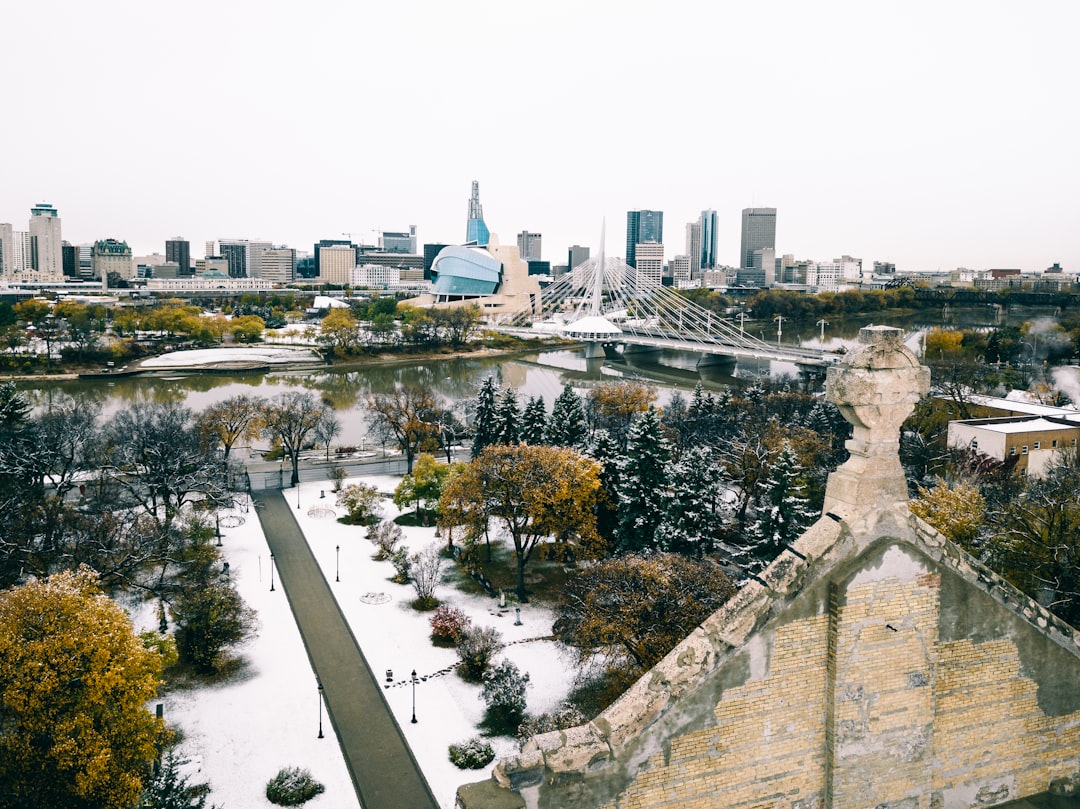
1. Winnipeg, Manitoba
- Shared room rent: $550 to $700/month
- Transit pass: $88/month (post-secondary student e-pass)
- Groceries: $280 to $320/month
- Phone: $40 to $50/month
- Estimated total: $958 to $1,158/month
- Annual savings vs. Toronto: $8,400 to $12,000
- Top DLIs: University of Manitoba (tuition $16,000 to $22,000/year), Red River College Polytechnic (tuition $13,500 to $16,000/year), University of Winnipeg (tuition $15,000 to $18,000/year)
Winnipeg is the city your parents have never heard of that could save your family more than $10,000 a year. University of Manitoba is a U15 research institution that ranks in Canada’s top 15 for engineering and sciences. Manitoba’s PNP graduate stream is one of the most accessible in Canada, and we will get to that in a moment.
2. Moncton, New Brunswick
- Shared room rent: $500 to $600/month
- Transit pass: $53/month (student 30-day pass)
- Groceries: $250 to $300/month
- Phone: $40 to $50/month
- Estimated total: $843 to $1,003/month
- Annual savings vs. Toronto: $10,800 to $14,400
- Top DLIs: Universite de Moncton (tuition $14,000 to $17,000/year), New Brunswick Community College (tuition $11,000 to $13,000/year)
Moncton consistently ranks as one of the cheapest cities to study in Canada for international students. The bilingual environment (English and French) can be an advantage if you want to boost your CRS score for Express Entry. New Brunswick’s PNP has a post-graduation stream specifically for graduates of provincial institutions.
3. Regina, Saskatchewan
- Shared room rent: $525 to $675/month
- Transit pass: $86/month (post-secondary monthly pass)
- Groceries: $275 to $325/month
- Phone: $40 to $50/month
- Estimated total: $926 to $1,136/month
- Annual savings vs. Toronto: $9,000 to $12,600
- Top DLIs: University of Regina (tuition $16,500 to $23,000/year), Saskatchewan Polytechnic (tuition $14,000 to $16,500/year)
Regina offers some of the lowest rents in Canada. Saskatchewan’s Students category under SINP provides a PNP pathway for graduates of Saskatchewan institutions who have six months of work experience and a full-time job offer in their field of study.
4. Saskatoon, Saskatchewan
- Shared room rent: $550 to $700/month
- Transit pass: $68/month (post-secondary semester pass)
- Groceries: $280 to $330/month
- Phone: $40 to $50/month
- Estimated total: $938 to $1,148/month
- Annual savings vs. Toronto: $8,400 to $12,000
- Top DLIs: University of Saskatchewan (tuition $18,000 to $26,000/year), Saskatchewan Polytechnic (tuition $14,000 to $16,500/year)
University of Saskatchewan is a U15 research university, placing it alongside schools like the University of Toronto and UBC in Canada’s top research tier. That is the kind of data point that reframes the “smaller city, worse school” objection for your parents. SINP student pathways apply in Saskatoon as well.
5. Trois-Rivieres, Quebec
- Shared room rent: $450 to $575/month
- Transit pass: $66/month (youth rate, 21 and under)
- Groceries: $260 to $310/month
- Phone: $40 to $50/month
- Estimated total: $816 to $1,001/month
- Annual savings vs. Toronto: $10,800 to $14,400
- Top DLIs: Universite du Quebec a Trois-Rivieres (tuition $16,000 to $22,000/year), College Lafleche (tuition $13,000 to $15,000/year)
Trois-Rivieres has the lowest total cost on this list. The catch: most programs are delivered in French. If you speak French or are willing to study in French, the savings are massive. Quebec’s Programme de l’experience quebecoise (PEQ) was closed in November 2025, but the replacement Skilled Worker Selection Program (PSTQ) still offers pathways for Quebec graduates. French proficiency is a significant CRS booster (up to 25 points for strong French, or up to 50 points if you are bilingual in both English and French). Note that Quebec has its own proof-of-funds requirement ($24,617 through MIFI) rather than the federal GIC of $22,895.
6. Sherbrooke, Quebec
- Shared room rent: $475 to $600/month
- Transit pass: Free for UdeS students (passe universelle); $70/month for other students under 21
- Groceries: $260 to $310/month
- Phone: $40 to $50/month
- Estimated total: $775 to $960/month (UdeS students); $845 to $1,030/month (other institutions)
- Annual savings vs. Toronto: $10,800 to $14,400
- Top DLIs: Universite de Sherbrooke (tuition $16,000 to $21,000/year), Champlain College Lennoxville (tuition $13,000 to $15,000/year)
Sherbrooke offers both French-language and English-language programs through Champlain College Lennoxville. Universite de Sherbrooke is well-known for co-op programs, which means paid work terms built into your degree. The same Quebec immigration pathways as Trois-Rivieres apply. Note that Quebec has its own proof-of-funds requirement ($24,617 through MIFI) rather than the federal GIC of $22,895.
7. Thunder Bay, Ontario
- Shared room rent: $550 to $700/month
- Transit pass: $64/month (youth pass, ages 13-24)
- Groceries: $290 to $340/month
- Phone: $40 to $50/month
- Estimated total: $944 to $1,154/month
- Annual savings vs. Toronto: $8,400 to $12,000
- Top DLIs: Lakehead University (tuition $22,000 to $28,000/year), Confederation College (tuition $14,500 to $17,000/year)
Thunder Bay is in Ontario, which matters if you want an Ontario degree on your resume. Lakehead University is a comprehensive university with strong programs in engineering, nursing, and natural resources. One caveat: Ontario’s PNP graduate streams were paused throughout 2025 and are being restructured in 2026, with all current streams losing their legal basis by May 30, 2026. The PR pathway through Ontario’s PNP is less predictable than Manitoba or Saskatchewan. You would rely more on Express Entry or the federal PGWP route.
8. St. Catharines, Ontario
- Shared room rent: $625 to $775/month
- Transit pass: $80/month
- Groceries: $300 to $350/month
- Phone: $40 to $50/month
- Estimated total: $1,045 to $1,255/month
- Annual savings vs. Toronto: $6,000 to $9,600
- Top DLIs: Brock University (tuition $22,000 to $28,000/year), Niagara College (tuition $15,000 to $18,000/year)
St. Catharines is the closest city on this list to the Greater Toronto Area, roughly 1.5 hours by GO Transit. That proximity gives you access to the Toronto job market for co-ops and post-graduation employment while keeping your living costs $500 to $800 per month lower. Niagara College has some of the strongest co-op and applied programs for international students in Ontario.
9. Halifax, Nova Scotia
- Shared room rent: $650 to $800/month
- Transit pass: $82.50/month
- Groceries: $300 to $350/month
- Phone: $40 to $50/month
- Estimated total: $1,072 to $1,282/month
- Annual savings vs. Toronto: $5,400 to $9,000
- Top DLIs: Dalhousie University (tuition $20,000 to $30,000/year), Saint Mary’s University (tuition $18,000 to $22,000/year), NSCC (tuition $11,000 to $14,000/year)
Halifax is the priciest city on this list, but it earns its spot because of Dalhousie University’s national reputation (consistently top 10 in Macleans rankings) and Nova Scotia’s NSNP Experience stream for graduates. Halifax also has the largest international student community among Atlantic Canadian cities, which means more cultural events, ethnic grocery stores, and community support than most other affordable cities.
10. Edmonton, Alberta
- Shared room rent: $600 to $750/month
- Transit pass: $45/month (U-Pass through most institutions)
- Groceries: $300 to $350/month
- Phone: $40 to $50/month
- Estimated total: $985 to $1,195/month
- Annual savings vs. Toronto: $6,000 to $9,600
- Top DLIs: University of Alberta (tuition $22,000 to $33,000/year), MacEwan University (tuition $19,000 to $22,000/year), NAIT (tuition $15,000 to $19,000/year)
University of Alberta is a top-5 Canadian university in multiple global rankings, and Edmonton’s cost of living is significantly lower than Calgary’s. Alberta has no provincial sales tax, which saves you roughly $600 to $900 per year on everyday purchases compared to Ontario (13% HST) or Quebec (14.975% combined). The Alberta Advantage Immigration Program (AAIP) has pathways for international graduates, though stream availability changes frequently.
Think of it this way: Arjun’s parents in Delhi are looking at $18,000 per year for a shared room in Toronto versus $8,400 per year in Winnipeg. That $9,600 difference means his mother does not have to take a second loan. When you lay those numbers side by side, the “prestige” of a Toronto address gets a lot harder to justify. But the cost savings are only half the story. What most students never calculate is how much faster these same cities can get you to permanent residency.
The Savings Table: Dollar-for-Dollar Comparison vs. Toronto and Vancouver
This is the table you screenshot and send to your parents. All figures are monthly averages in Canadian dollars, based on 2025-2026 data. For a deeper look at what goes into the GIC and how banks handle the monthly payout, read the bank-by-bank GIC comparison.

| City | Rent (shared) | Transit | Groceries | Phone | Total/month | Annual savings vs. Toronto |
|---|---|---|---|---|---|---|
| Toronto | $1,250 | $156 | $375 | $50 | $1,831 | Baseline |
| Vancouver | $1,200 | $149 | $390 | $50 | $1,789 | $504 |
| Winnipeg | $625 | $88 | $300 | $45 | $1,058 | $9,276 |
| Moncton | $550 | $53 | $275 | $45 | $923 | $10,896 |
| Regina | $600 | $86 | $300 | $45 | $1,031 | $9,600 |
| Saskatoon | $625 | $68 | $305 | $45 | $1,043 | $9,456 |
| Trois-Rivieres | $513 | $66 | $285 | $45 | $909 | $11,064 |
| Sherbrooke | $538 | $0 | $285 | $45 | $868 | $11,556 |
| Thunder Bay | $625 | $64 | $315 | $45 | $1,049 | $9,384 |
| St. Catharines | $700 | $80 | $325 | $45 | $1,150 | $8,172 |
| Halifax | $725 | $83 | $325 | $45 | $1,178 | $7,836 |
| Edmonton | $675 | $45 | $325 | $45 | $1,090 | $8,892 |
Annual savings range from $7,836 (Halifax) to $11,556 (Sherbrooke, for UdeS students). Even the most expensive “affordable” city on this list saves you nearly $8,000 annually compared to Toronto. Over a two-year diploma or a four-year degree, that is $15,672 to $46,224 in total savings. But saving $8,000 to $11,000 on living costs is only half the advantage these cheapest cities to study in Canada offer. The other half is what happens after you graduate, and it might be worth even more than the rent savings.
The PR Pathway Advantage Nobody Talks About
Cost savings alone would be enough reason to consider these cities. But the real advantage is what happens after graduation. Every city on this list sits in a province with an active PNP stream for international graduates, and several of those streams are significantly easier to qualify for than Ontario’s or BC’s. You can verify which institutions qualify as Designated Learning Institutions on the IRCC DLI list before you apply.
Manitoba Provincial Nominee Program (MPNP)
Manitoba’s International Education Stream lets graduates of Manitoba institutions who completed their program within the past three years apply for a provincial nomination. If you have a job offer (or sometimes even without one, depending on your field and the pathway), Manitoba nominates you for PR. A PNP nomination adds 600 points to your CRS score, which virtually guarantees an Express Entry invitation. Processing times average 4 to 8 months for the provincial stage. Consider a student who chose Winnipeg over Toronto in 2024: she received her MPNP nomination within 5 months of graduating from Red River College, while her classmates who studied in Toronto are still waiting on Ontario’s suspended PNP graduate stream with no timeline for reopening.
Saskatchewan Immigrant Nominee Program (SINP)
SINP’s Students category (under the Workers with Saskatchewan Experience stream) is open to graduates of Saskatchewan post-secondary institutions who have at least six months (780 hours) of paid work experience in their field of study and a full-time job offer in Saskatchewan. The program has regular draws and processing times of 3 to 6 months at the provincial level.
Nova Scotia and New Brunswick
Nova Scotia’s NSNP International Graduate Entrepreneur Stream and the Nova Scotia Experience: Express Entry stream both offer pathways for graduates of Nova Scotia institutions. The Experience stream connects directly to the federal Express Entry system, and Nova Scotia has been increasing its annual PNP allocation steadily. New Brunswick supports graduates through its Skilled Worker Stream (which has a sub-category specifically for NB graduates), the Strategic Initiative stream, and the Atlantic Immigration Program (AIP), which provides an additional PR pathway for graduates working in Atlantic Canada. For college programs that lead to PGWP eligibility across all of these provinces, see the honest guide to colleges in Canada for international students.
What About Ontario and BC?
Ontario’s PNP graduate streams were paused throughout 2025 and are being restructured entirely by May 2026. BC’s PNP graduate streams were frozen for portions of 2025. Both provinces receive far more PNP applications than they can process, which means longer waits and higher rejection rates. This is the factor most students overlook: the province where you study often determines how quickly you can get PR, and smaller provinces process nominations faster because they have fewer applicants competing for available spots.
So you save thousands on rent, and you get a faster PR pathway. Of course, lower costs and better PR odds come with trade-offs that nobody mentions in the brochures.
Part-Time Work and Minimum Wage by City
Your study permit allows you to work up to 24 hours per week during academic terms and full-time during scheduled breaks. At 24 hours per week, your monthly income before taxes depends on your province’s minimum wage:
| Province | Minimum wage (2025-2026) | Monthly income at 24 hrs/week |
|---|---|---|
| Ontario | $17.60/hr | $1,829 |
| Quebec | $16.10/hr | $1,673 |
| Alberta | $15.00/hr | $1,559 |
| Manitoba | $16.40/hr | $1,704 |
| Saskatchewan | $15.35/hr | $1,596 |
| Nova Scotia | $16.75/hr | $1,741 |
| New Brunswick | $15.90/hr | $1,653 |
Ontario’s minimum wage is the highest, but that $125 to $270 monthly difference in earnings is completely dwarfed by the $650 to $900 monthly difference in living costs. A student in Winnipeg earning $1,704 per month and spending $1,058 on essentials keeps $646 for savings or extra spending. A student in Toronto earning $1,829 and spending $1,831 is essentially breaking even before part-time work even touches the GIC deficit.
Co-op programs in smaller cities also offer a practical advantage: fewer students competing for each placement. Employers in Winnipeg, Saskatoon, and Moncton actively recruit international students for co-op positions because the candidate pool is smaller. In Toronto, you are competing with students from dozens of institutions for the same placements. The wage and co-op data make the financial case clear, but what about the things that do not show up on a spreadsheet?
What About the Downsides? Climate, Size, and Social Life
No honest guide to the cheapest cities to study in Canada skips the trade-offs. These cities are cheaper for a reason, and you need to know what you are signing up for.

Prairie Winters Are Brutal
Winnipeg’s average January temperature is -16.4C, with windchills regularly hitting -30C to -40C. Regina and Saskatoon are similar. If you are coming from South Asia, West Africa, or the Middle East, this is a serious adjustment. Budget $300 to $500 for a proper winter jacket, insulated boots, thermal layers, and accessories. That is a one-time cost that slightly offsets your first year’s savings.
Smaller Social Scenes
Winnipeg (population 834,000) and Halifax (population 460,000) have active social scenes. But Moncton (population 155,000), Trois-Rivieres (population 140,000), and Thunder Bay (population 110,000) are small cities. Nightlife is limited. Ethnic grocery stores and restaurants are fewer. If a vibrant social life and easy access to cultural communities from your home country matter to you, weigh that against the cost savings. For tips on managing those first days in a new city, read what your first 7 days in Canada actually cost.
Fewer Direct International Flights
Toronto Pearson and Vancouver International have direct flights to most major international cities. Flying to Winnipeg, Moncton, or Regina almost always requires a connection through Toronto, Montreal, or Calgary. That adds $100 to $300 per trip and 3 to 6 hours of travel time. Over a two-year program with four round trips home, that is $400 to $1,200 extra in flight costs.
French Language in Quebec Cities
Trois-Rivieres and Sherbrooke are primarily francophone cities. Daily life, grocery shopping, landlord interactions, and government services all happen in French. If you do not speak French, Trois-Rivieres will feel isolating. Sherbrooke is slightly more bilingual due to Bishop’s University and Champlain College, but French is still the dominant language. On the positive side, learning French while you study adds up to 50 bonus CRS points for Express Entry (if you also have strong English), which is a significant advantage for PR.
An Honest Assessment
If you can handle cold winters and a smaller social circle, the financial and PR advantages of these cheapest cities to study in Canada are overwhelming. If proximity to a large cultural community from your home country is essential to your mental health, Halifax, Winnipeg, and Edmonton offer the best balance of affordability and community size. Every trade-off on this list is manageable. An $8,000 to $15,000 annual rent deficit is not.
Your Next Step: Pick the City That Fits Your Budget and Your PR Plan
You now have the cost data, the DLI options, and the PNP pathways for 10 cheapest cities to study in Canada that stretch your GIC across a full 12 months. The question is no longer “Can I afford to study in Canada?” It is “Which affordable city gives me the best shot at PR after graduation?”
Start by narrowing to two or three cities based on your budget and your target PNP stream. Then check which DLIs in those cities offer your program. Compare tuition, co-op availability, and post-graduation employment rates. These articles cover the specific details you need to make that decision:
- Student Housing in Canada for International Students: The 2026 City-by-City Cost Guide breaks down rent, utilities, and housing types for every city on this list so you can budget accurately before you arrive.
- Your $22,895 GIC Will Not Last 12 Months in Toronto: The Real Budget International Students in Canada Need shows the full monthly budget math, including costs most guides leave out, so you can share the numbers with your parents.
- Before You Wire $22,895 for Your Canada Study Permit GIC: The Bank-by-Bank Comparison compares GIC providers by fees, interest rates, and payout schedules so you keep more of your deposit.
- The Only Honest Guide to Colleges in Canada for International Students covers PGWP-eligible college programs in these affordable cities, including tuition, co-op rates, and graduation outcomes.
Consult a licensed immigration professional for advice specific to your situation, especially regarding PNP eligibility and study permit requirements. Provincial nominee programs change their criteria and intake volumes regularly, so confirm current stream status on the IRCC Provincial Nominee Programs page and on your target province’s official immigration website before making a final decision.
Toronto and Vancouver cost your family $8,000 to $15,000 more per year. The cheapest cities to study in Canada offer the same quality of education, better PR pathways, and a GIC that actually lasts 12 months. The only thing standing between you and that savings is the same advice everyone gives because everyone else gives it. Run your own numbers. The spreadsheet does not lie.
Frequently Asked Questions
Is the GIC amount ($22,895) actually enough to live on for a year in Canada?
In Toronto or Vancouver, no. The GIC pays out roughly $1,908 per month, but shared accommodation alone costs $1,100 to $1,400 in those cities. Add transit, groceries, and a phone plan, and you face a $300 to $900 monthly deficit. In cities like Winnipeg, Moncton, or Regina, the same $1,908 covers rent, food, transit, and basic expenses with $200 to $400 left over each month.
Which is the cheapest city to live in Canada as an international student?
Moncton, New Brunswick consistently ranks as the cheapest. A shared room averages $500 to $600 per month, groceries run about $250 to $300, and a student transit pass costs $53. Total monthly student costs in Moncton average $843 to $1,003, which is roughly $900 less per month than Toronto.
Are universities in smaller Canadian cities lower quality than Toronto or Vancouver?
No. University of Manitoba ranks in the top 15 in Canada for engineering. University of Saskatchewan is a U15 research university, placing it in the same research tier as the University of Toronto and UBC. Dalhousie University in Halifax consistently places in the top 10 nationally in Macleans rankings. Several affordable-city universities outperform mid-tier Toronto and Vancouver institutions on both academic quality and student satisfaction.
Can I apply for PNP if I studied in a different province than where I want to work?
Yes, but most Provincial Nominee Programs prioritize graduates from institutions within that province. Manitoba, Saskatchewan, and Nova Scotia all have graduate-specific PNP streams that require you to have studied at a local DLI. If you studied in Ontario but want a Manitoba PNP nomination, you would need to meet the skilled worker stream requirements instead, which are more competitive. Plan your province from the start.
Does choosing a cheaper city hurt my job prospects after graduation?
Not necessarily. Cities like Winnipeg, Halifax, and Edmonton have lower unemployment rates than Toronto. Smaller cities also have less competition for student jobs, which means stronger co-op placements and part-time work during your studies. Many employers in these cities actively recruit international graduates because they struggle to fill positions. The trade-off is a smaller total job market, but the per-capita competition is lower.