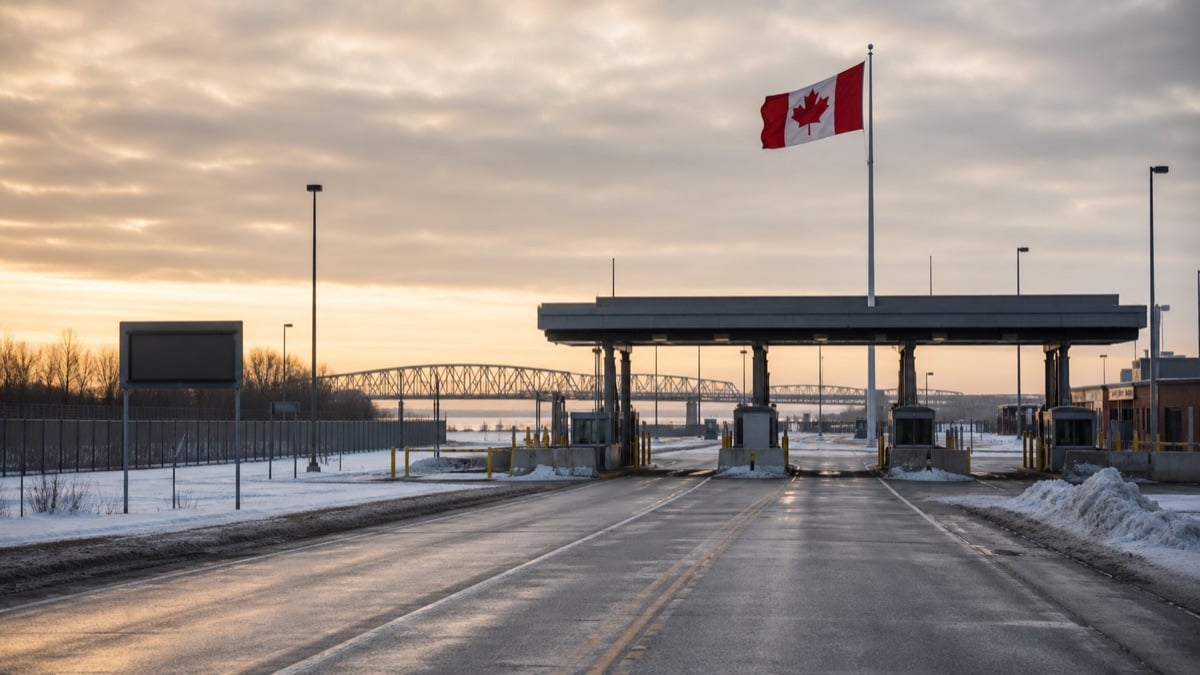
You graduate this month. Your study permit expires in May. Your online PGWP sits at “in process,” and your warehouse manager is already asking whether you can keep your shifts past the expiry date. The friend in your WhatsApp group says to take the bus to the Fort Erie Peace Bridge, do a quick flagpole, and walk back with a work permit by dinner.
That advice is two years out of date, and acting on it can cost you a 5-year ban from Canada. Flagpoling PGWP Canada border processing was killed on two specific dates: June 21, 2024 for PGWP applicants, and December 23, 2024 at 11:59 PM ET for almost every other temporary resident. This article gives you the definitive 2026 answer, the three-row decision tree, the IMM 0127 mechanism that keeps your job alive while IRCC processes you online, and the IRPA s.40 trap that a “just show up” attempt can spring.
The Two Dates That Killed PGWP Flagpoling (and Why a 2024 Blog Post Is Lying to You)
Two policy changes, eighteen months apart, removed the same-day border permit for almost every reader of this site.
The first change took effect on June 21, 2024. IRCC stopped accepting PGWP applications at any Canadian port of entry. Minister of Immigration, Refugees and Citizenship Marc Miller framed it plainly at the time: “While we continue to support and recognize the contributions of international graduates to Canada’s labour market, flagpoling is unnecessary.” The data behind the change was specific. Between March 2023 and February 2024, PGWP applicants accounted for roughly one fifth of all flagpoling attempts in Canada, and the volume was clogging both Canadian and American officers at land borders.
The second change took effect on December 23, 2024 at 11:59 PM ET. CBSA and IRCC ended flagpoling for work and study permits across the board for almost all foreign nationals. The official rationale was that the practice “has taken up significant resources at the border, diverting Canadian and American officers away from important enforcement activities.” You can read the full announcement on the CBSA news release.
A blog post written before December 17, 2024 is missing the universal ban. One written before June 21, 2024 is missing the PGWP-specific ban that came first. Both halves matter, because PGWP applicants now face two overlapping prohibitions, not one. The myth that consultants keep selling is that one of these gates is still open. Neither is.
Can You Still Flagpole? The 3-Row Decision Tree for 2026
Read the three rows below. Find the one that matches your status today. The answer for the PGWP applicant is the same regardless of which other row you might also fit into.
Row A: You are in an exempt category (and you are not applying for a PGWP)
You can still flagpole in 2026 if you fit one of the categories CBSA kept on the exempt list after December 23, 2024:
- U.S. citizens and U.S. lawful permanent residents
- Professionals and workers entering under free trade agreements: CUSMA (the United States-Mexico-Canada Agreement) and the equivalent agreements with Chile, South Korea, Panama, Colombia, and Peru
- International truck drivers maintaining status while renewing a work permit
- Applicants with a pre-scheduled CBSA appointment at a designated port of entry
The four major land flagpoling points still in operation are the Niagara Falls Rainbow Bridge, the Fort Erie Peace Bridge, Lacolle in Quebec, and the Pacific Highway crossing in British Columbia. If you are in Row A and your permit category is on the exempt list, these are the POEs you would still use.
Row B: You are a PGWP applicant with no other status hook
You cannot flagpole. The PGWP itself is barred from port-of-entry processing, and this rule applies regardless of citizenship or any free trade exemption. A Canadian graduate from India, the Philippines, Nigeria, Pakistan, or anywhere else who finished a Sheridan diploma, a Conestoga post-grad, a Centennial advanced diploma, or a Trent master’s program in 2026 is in Row B. The only legal lane to obtain your PGWP is the online application through your IRCC secure account using GCKey or a sign-in partner. The official application instructions are on the IRCC PGWP page.
Row C: Edge cases (CUSMA-eligible profession, dual intent, pre-scheduled appointment)
Edge cases are where most readers get themselves in trouble. Consider a computer systems analyst who graduates from Sheridan with a Canadian employer offer and a passport that supports a CUSMA work permit. The consultant tells him to flagpole because “computer systems analyst” is on the CUSMA schedule. Half right, half wrong.
What CUSMA covers: the CUSMA work permit category can still be issued at the border. What CUSMA does not cover: the PGWP. The PGWP is its own permit type and was removed from port-of-entry issuance on June 21, 2024. If he wants the PGWP specifically (because it counts toward Canadian work experience for Express Entry under the Canadian Experience Class), he applies online. If he just wants a work permit so he can start the warehouse job Monday, the CUSMA route at the border still works. Two different permits, two different rules. If your employer offer is not CUSMA-eligible and you are looking for the LMIA path instead, the directory of LMIA-supported jobs international graduates actually qualify for is the right next read.
The other edge case is the in-Canada worker renewing a non-PGWP work permit with a pre-scheduled CBSA appointment. CBSA continues to process those by appointment at certain POEs. There is no appointment lane for the PGWP.
Summary: Row A means yes for your specific non-PGWP permit. Row B means no, full stop. Row C means parse carefully, because permit type matters more than citizenship.

Is It Faster? The Math: 90 to 180 Days Online vs Zero Days at the Border (Because the Border Is Closed)
“Faster” is the wrong question now, because the only legal lane is the online lane. The comparison still matters because it tells you what to plan for.
Online inland PGWP applications in 2026 are processing in roughly 90 to 180 days. Paper applications from outside Canada run 4 to 7 months. The figure of about 227 days you may see quoted in some forums is the broader in-Canada work permit average, not the PGWP-specific number. The live figure is on the IRCC processing times tool, which you should check the day you apply and once a month after.
- 2023 same-day flagpoling: zero days. Walk to the Peace Bridge, get the permit stamped, walk back.
- 2026 online PGWP: 90 to 180 days from AOR to final decision.
The reason this matters is not the speed of the permit. It is the speed of the document that lets your employer keep you on payroll while you wait. That document is the actual replacement for the same-day flagpole.
The IMM 0127 Interim Work Authorization Letter: How You Keep Working While IRCC Takes Five Months
The morning after you submit a complete PGWP application, an AOR PDF lands in your GCKey inbox. A few business days later, you receive a separate PDF called the Interim Work Authorization Letter, IMM 0127 E. This is the document that does the heavy lifting now that flagpoling is gone.
What the IMM 0127 E letter does:
- Confirms in writing that IRCC has received your PGWP application
- Authorizes you to work full-time while your application is processed, provided you meet the eligibility conditions below
- Remains valid for 180 days from your AOR date
Who is eligible to use the IMM 0127 letter to work full-time while waiting:
- You completed your program of study at a Designated Learning Institution (DLI)
- You were eligible to work off campus under your study permit
- You stayed within the off-campus work limit (24 hours per week during academic sessions in 2026; full-time during scheduled breaks). The 20 versus 24 hours question trips up a lot of students, so verify your specific period of study
- You applied for the PGWP within 180 days of your program completion date
The critical 2025 update most consultants still miss: under current IRCC guidance, your right to keep working full-time while the PGWP is pending continues even if the 180-day IMM 0127 letter expires before a decision is made. You do not need to stop working when the letter lapses, as long as you remain otherwise eligible and you stay in Canada. The legal basis is in IRPR 186(w) for the work authorization and IRPR 183(5) for maintained status. The plain-English version is on the IRCC Help Centre answer for “Can I work while waiting for my PGWP”.
What you send your warehouse manager, your Tim Hortons supervisor, or your HR contact: the AOR PDF, the IMM 0127 E letter, your current study permit (even if it is about to expire), your valid passport, your SIN letter, and a short cover note explaining maintained status. The full six-piece document stack and a copy-paste email template are in the PGWP pending employer document stack guide. If your study permit is set to expire before your completion letter even arrives, read the 180/90-day window guide before doing anything else, and verify your off-campus limit against the 20 versus 24 hours rule.
This combination, the IMM 0127 letter plus maintained status, is the mechanism that replaces flagpoling. It is not a same-day permit. It is a same-week document stack that keeps you working legally until IRCC issues the real PGWP.
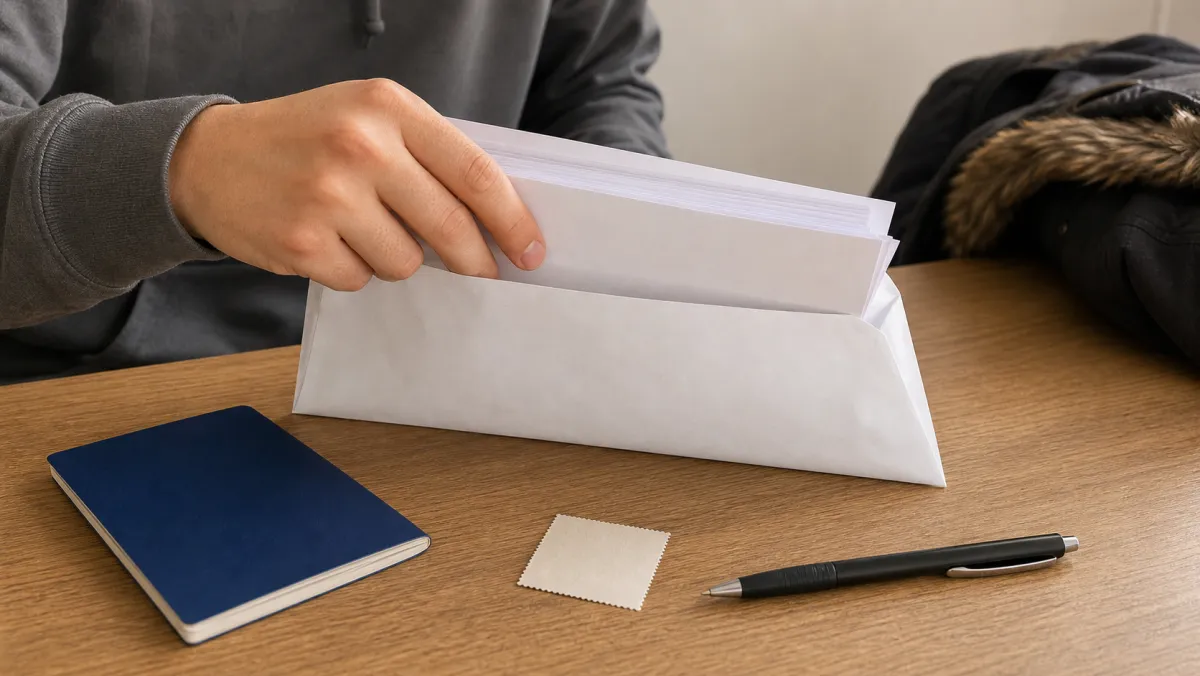
The 5-Year Ban Hidden in Plain Sight: IRPA s.40 Misrepresentation If You Try Anyway
The most common message in the CanadaSmarts inbox after a PGWP applicant reads about the ban is some version of: “But the CBSA officer will just process me if I show up, right?”
They will not. What happens at the Niagara Falls Rainbow Bridge, the Fort Erie Peace Bridge, Lacolle, or Pacific Highway if you arrive in 2026 and tell a CBSA officer you want to flagpole a PGWP:
- The officer refuses to process the PGWP. The instruction in the operational manual is to direct you back to the online portal.
- You are turned back into the United States or refused re-entry to Canada. The exact outcome depends on the officer’s read of your case and your status documents.
- If you misstate any material fact during the interaction (the purpose of your travel, your status, your study permit dates), you can be found inadmissible for misrepresentation under section 40 of the Immigration and Refugee Protection Act (IRPA).
- An IRPA s.40 misrepresentation finding carries a 5-year inadmissibility ban from Canada. That is five years where you cannot return as a student, a worker, a visitor, or a permanent resident.
Maintained status only protects you while you are in Canada. The moment you cross into the United States to flagpole, you have left Canada. If your study permit is already expired and your PGWP has not been approved, you can find yourself on the U.S. side of the Peace Bridge with no current status in either country.
The cost of guessing wrong: a bus ticket to Niagara or Fort Erie (around $80 to $150 round trip from Toronto), a missed warehouse shift, a possible 5-year ban, and the permanent loss of your job because your SIN is no longer valid.
This article is general information, not legal advice. Consult a licensed Canadian immigration lawyer or a Regulated Canadian Immigration Consultant (RCIC) for advice specific to your situation.
What You Actually Do This Week: A 6-Step Plan to Get Your PGWP Online Without Falling Out of Status
The week your final transcript or completion letter arrives, run the following six steps in order.
- Confirm eligibility. Verify that your program is PGWP-eligible (DLI on the official list, program length 8 months or more, full-time status maintained). If you are in a business diploma or any program affected by the November 1, 2024 CIP code changes, read the PGWP CIP code 2026 guide first because the grandfathering rules can save or kill your eligibility. If you completed your program faster than the standard timeline, also check how finishing your diploma early changes your PGWP length before you submit. Verify your language test result meets the threshold.
- Apply online before your study permit expires. Log in to your IRCC secure account with GCKey or a sign-in partner. Complete the PGWP application. Pay the $255 fee ($155 for the work permit plus $100 for the open work permit holder fee). Filing before your study permit expiry is what triggers maintained status. Do not wait.
- Save the AOR PDF. It usually appears within minutes to hours of submission. Download it, email it to yourself, and keep a copy on your phone.
- Download the IMM 0127 E letter. It typically arrives in your IRCC account within a few business days after the AOR. This is the document your employer wants. Download both English and French copies if you live in Quebec.
- Send your employer the 6-document stack. AOR, IMM 0127 E, current study permit, passport, SIN letter, and a short cover note explaining maintained status. Use the copy-paste email at the employer document stack guide. If HR pushes back, the explanation is IRPR 186(w) plus IRPR 183(5).
- Check IRCC processing times monthly. Do nothing else. The application is in queue. Refreshing your GCKey inbox four times a day will not move it. Showing up at Fort Erie will not move it. The only thing that moves it is time.
The Express Entry Canadian Experience Class clock starts the day you begin working under the IMM 0127 letter, not the day the PGWP is finally approved. So the months you spend waiting are not lost months. They are countable Canadian work experience, which is the entire reason you wanted the PGWP in the first place. To estimate where this experience puts you in the draws, run the numbers through the 2026 CRS score calculator for Express Entry, and read the 2025 removal of CRS job offer points before you assume a Canadian offer adds 50 to your score.
Frequently Asked Questions
Can I still flagpole if I am a CUSMA professional and also applying for a PGWP?
CUSMA covers same-day issuance of the CUSMA work permit category at the port of entry. It does not cover the PGWP. The PGWP itself is barred from port-of-entry processing as of June 21, 2024. You apply for the PGWP online through your IRCC secure account, even if you also qualify for a CUSMA permit.
What happens if my study permit expires while my PGWP is in process?
If you submitted the PGWP application before your study permit expiry, you are on maintained status. You can stay in Canada and keep working full-time under the conditions of your prior permit until IRCC decides your PGWP. If the study permit expired before you applied, you have 90 days to file a restoration application along with your PGWP. See the study permit expiry guide for the 180-day and 90-day windows in detail.
My friend flagpoled last month. Why could he do it and I cannot?
He was almost certainly on the exempt list. The most common exempt categories are U.S. citizens, U.S. lawful permanent residents, professionals applying under free trade agreements such as CUSMA, and applicants with a pre-scheduled CBSA appointment. PGWP applicants have been barred from flagpoling since June 21, 2024 regardless of which exempt category they would otherwise fit.
My online PGWP has been pending for 5 months. Can I drive to Niagara now to ask CBSA to process it as a one-time exception?
No. There is no exception lane for PGWP flagpoling in 2026. A CBSA officer at any land port of entry will refuse to process the PGWP and direct you back to the online portal. Leaving Canada in this scenario can also break maintained status. Keep working under your interim work authorization letter or maintained status and check IRCC processing times monthly.
Does maintained status protect my SIN if my study permit has already expired but my PGWP is still in process?
Yes, if you applied for the PGWP before your study permit expired and you met the off-campus work conditions during your studies. Your SIN remains valid for work, and the employer can keep you on payroll full-time. The legal basis is IRPR 186(w) combined with maintained status under IRPR 183(5). See the employer document stack guide for the exact six pieces your manager will want to see.
Your Next Action
If you are a PGWP applicant in 2026, your job this week is not to book a bus to Niagara. It is to submit the online application before your study permit expires, then arm your employer with the document stack that keeps your SIN active for the next 90 to 180 days.
The single most useful next step: open the PGWP pending employer document stack guide, copy the six-document checklist, send it to your manager today, and put the bus fare back in your rent envelope. The Canadian Experience Class clock is already ticking under the IMM 0127 letter. The PGWP itself will land when it lands, and you will keep working the whole time.
For viral consultant claims you should ignore until they are confirmed by IRCC directly, read the 2026 automatic open work permit myth debunker. If a WhatsApp message contradicts the canada.ca page, the canada.ca page wins.